


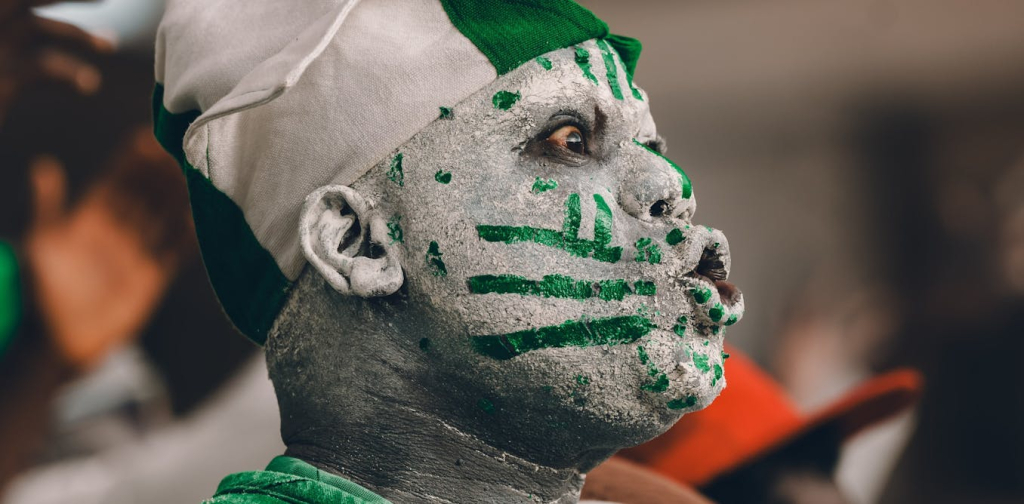

The history of African performances at the men’s football World Cup is a story of resilience, technical skill, joyful expression, and the breaking of systemic barriers. For decades, global football governance structures heavily favoured European and South American teams, leaving Africa to fight not just for wins on the pitch, but for representation itself.
Read more: Can an African team win the World Cup? New football study crunches the numbers


As a sports scholar, I’ve published numerous studies on Africa at the World Cup. In a new self-published book I outline the defining moments for the continent at the tournament.
They help tell the story of how African football transformed itself from a peripheral curiosity into a central force on the global stage.
1934: Egypt breaks the ice
The first World Cup was held in 1930 in Uruguay, but Africa’s World Cup story began in Italy in 1934. Egypt became the first African nation to participate in the tournament.
In a straight knockout format, the Pharaohs faced a formidable Hungary. Although Egypt lost 4-2, Abdulrahman Fawzi scored twice, netting Africa’s historic first goals at the tournament. This debut proved that African players could compete on the global stage, laying the foundation for generations to come.
1970: Morocco claims Africa’s first point
After decades of structural exclusion and an Africa-wide boycott of the 1966 tournament over unfair qualification slots, global football body Fifa finally granted the Africa region a guaranteed spot.
Morocco represented Africa in Mexico and made history by securing the continent’s first-ever point at a World Cup. After a narrow 2-1 loss to West Germany, the Atlas Lions drew 1-1 with Bulgaria. It was a modest result but it signalled Africa would no longer be a pushover.
1974: Zaire spearheads sub-Saharan visibility
Zaire (now the Democratic Republic of Congo) at the 1974 World Cup in West Germany is often remembered for its lack of tactical preparation, a controversial free kick and a heavy 9-0 defeat to Yugoslavia. But its historical significance remains undeniable.
Zaire was the first sub-Saharan African nation to qualify for the World Cup finals. Their presence shattered geographic and cultural assumptions within the sport, bringing the vibrant energy of central African football to global television screens.
1978: Tunisia secures Africa’s first win
The 1978 World Cup in Argentina witnessed a breakthrough. Tunisia lined up against Mexico in their opening group match.
Trailing 1-0 at half time, the Carthage Eagles staged a spectacular second half comeback, scoring goals through Ali Kaabi, Néjib Ghommidh and Mokhtar Dhouieb to win 3-1. This was Africa’s first-ever match victory at the World Cup, forcing Fifa to reconsider the continent’s allocation of qualification slots. It moved from one team to two.
1982: Algeria stuns Germany
In Spain in 1982, Algeria produced one of the greatest upsets in football history. Facing the reigning European champions, West Germany – who openly mocked the African debutants ahead of the match – Algeria played a masterclass of fast, fluid passing.
Goals from Rabah Madjer and Lakhdar Belloumi secured a stunning 2-1 victory. Though a controversial match between West Germany and Austria later eliminated Algeria, their performance permanently altered how European giants viewed African opposition.
1986: Morocco tops the group of death
Morocco returned to Mexico in 1986 and achieved what no African team had done before: advancing past the group stage. Drawn into a brutal group alongside England, Poland and Portugal, the Atlas Lions topped the standings.
They drew 0-0 with both Poland and England before dismantling Portugal 3-1. While they narrowly fell 1-0 to West Germany in the round of 16, Morocco proved that African teams could not only compete but dominate tough groups.
1990: Cameroon marches into the quarter-finals
The 1990 World Cup in Italy belonged to Cameroon. The Indomitable Lions shocked the world in the opening match by defeating Diego Maradona’s Argentina 1-0 despite finishing with nine men.
Led by veteran Roger Milla, whose goals and corner-flag dance celebrations became the tournament’s defining image, Cameroon advanced to the quarter-finals. They pushed England to the absolute limit in a thrilling 3-2 extra time loss, capturing the global imagination.
2002: Senegal tames the world champions
Making their World Cup debut in South Korea and Japan, Senegal opened the 2002 tournament against defending champions France. In a narrative fit for a movie script, the Teranga Lions defeated their former colonial rulers 1-0, thanks to a goal from Papa Bouba Diop.
Senegal’s tactical discipline and explosive counterattacks carried them all the way to the quarter-finals, replicating Cameroon’s feat and solidifying Africa’s status as a breeding ground for world-class talent.
2010: Ghana rises to the sound of vuvuzelas
The 2010 World Cup in South Africa was a celebration of African culture. The first cup hosted by an African nation, it was soundtracked by the deafening hum of the vuvuzela blown by fans.
On the pitch, Ghana’s Black Stars carried the hopes of the continent, offering crucial lessons in technical and tactical execution on the modern soccer stage. Displaying astonishing defensive organisation and flair, Ghana reached the quarter-finals against Uruguay. They were a penalty kick away from the semi-finals after Uruguay’s Luis Suárez infamously blocked a goal bound header with his hands. Though they lost the subsequent shootout, Ghana’s run unified the continent in pride.
2022 and 2026: Morocco rewrites history
Eighty-eight years after Egypt’s debut, Morocco achieved the ultimate breakthrough at the 2022 World Cup in Qatar. Led by coach Walid Regragui, the Atlas Lions topped a group containing Croatia and Belgium, eliminated Spain in the round of 16, and defeated Portugal in the quarter-finals.
In doing so, Morocco became the first African and Arab nation to ever reach a World Cup semi-final. Their defensive masterclass shattered the glass ceiling for continental football, fulfilling the optimistic vision long predicted for African soccer.
The Atlas Lions continued their excellent performance in 2026 by eliminating Netherlands and Canada to qualify for the quarter-finals at the 2026 World Cup. They are the first African nation to at least reach the quarter-finals two tournaments in a row. Such an accomplishment demonstrates the level of development of the game in the country as well as the potential of African football.
The road ahead
As documented across historical analyses of the game, these 10 moments were more than just sporting triumphs; they represent a progressive dismantling of global football’s old hierarchy.
Read more: Women football players in Africa have overcome enormous barriers – new book tells the story
Heading to the 2030 World Cup, co-hosted by Morocco, the stage is now set for African nations to build on this rich legacy and eventually claim the ultimate prize in football.
















Comments are closed.