


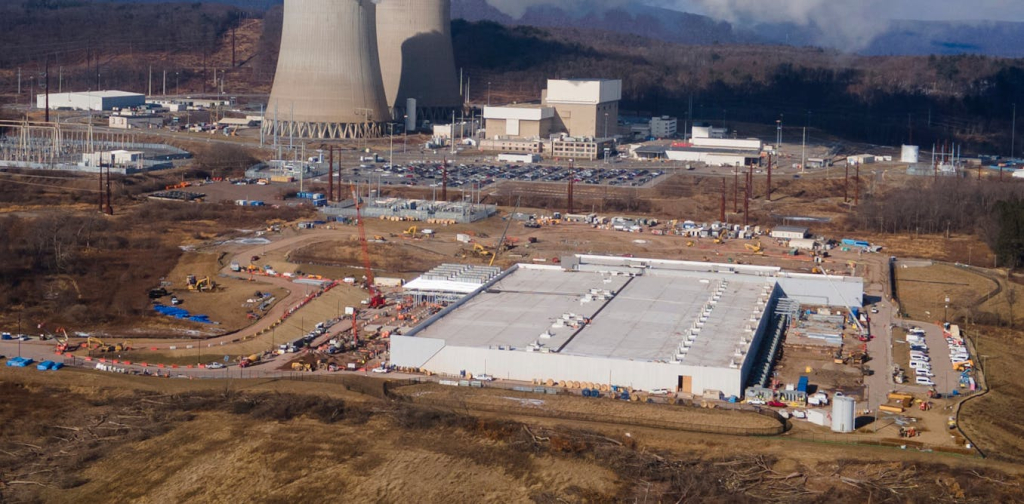

The fierce backlash against data centers shows no sign of easing up.
Since early 2024, more than 1,200 public actions – including zoning fights, public campaigns and temporary moratoriums – have been logged by the Data Center Tracker, a public U.S. database of community responses to data center site selection. Among the concerns, grid capacity, water use and transparency around siting appear most often.



This momentum is leading to political action. In Maine, lawmakers passed a contested bill in spring 2026 that would have imposed the nation’s first statewide moratorium on new data centers. Gov. Janet Mills ultimately vetoed the measure on grounds that it would scuttle a US$550 million conversion of the closed Androscoggin Mill in the town of Jay into a data center.
But in a nod to the political climate, Mills said she supported in principle a pause in development and signed separate legislation barring state tax incentives going to data centers. She also pledged to create a council to study the industry statewide.
Maine’s dispute shows how statewide decisions on whether to promote or curb data centers can come down to one local case. It was no isolated example: Up to 10 other states are considering similar measures to contain their expansion.
But lawmakers across the country still lack clear evidence on whether new data centers can boost the economies of the communities hosting them.
As scholars of how technological change and innovation shape business strategy, we set out to produce rigorous research so that policymakers can make better decisions for their communities despite the emotions on both sides.
What we found was that data center development can boost growth and jobs – but these benefits are most pronounced when the local economy is more urban and developed. In fact, it turns out that the local economy around a data center matters more than the facility itself.
Testing the data center promise
For years, state and local governments have courted data center projects with property tax abatements, sales tax exemptions and other incentives. Some jurisdictions still compete aggressively, but more and more are turning the other way, blocking tens of billions of dollars in proposed investments.
To understand the full economic impact, we combined records of when the centers began operating with data on local economic activity. We then compared how those economic outcomes changed before and after a county’s first data center opened relative to similar counties without data centers.
Overall, we found that data centers do boost growth. In the first three years after one opened, local employment rose on average by about 0.9%, wages by 1.1%, and the number of business establishments by 1%. Longer term, those effects grew to roughly 3.5%, 5% and 4.7%, respectively. Household income and building permits, meanwhile, increased by 1.9% and 16.1%, respectively. All of these gains accumulate gradually, rather than at once.
But the average effects mask an important pattern. Data centers are more likely to juice the economy when there’s a cluster of labor and capital already nearby, such as construction contractors, equipment suppliers, professional services and a skilled workforce.
In metropolitan counties, where that cluster of labor and capital is thicker, employment jumped by about 4.1%, while wages increased by 5.5%. In less populous counties, by contrast, job and wage spillovers were negligible. This suggests that the host community’s level of economic development matters more than the size of the project.
That said, other factors also affected local economic effects from one area to the next. Facilities operated by major tech companies, for example, raised local wages more than smaller companies. In addition, counties that attracted multiple data centers within five years of the first showed larger cumulative gains than counties with a single, isolated facility.
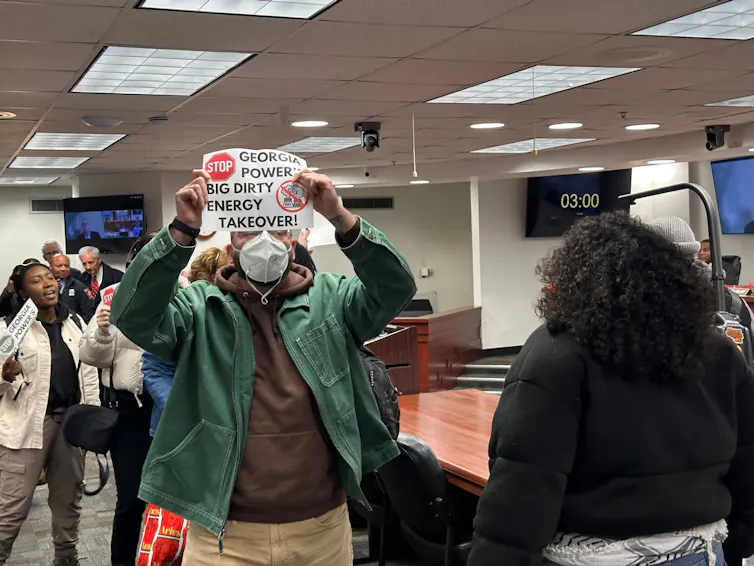
What about electric bills?
Electricity in the United States is delivered through complex regional grids and regulated utilities. In turn, retail prices depend on state and local rules and how costs are allocated among households, businesses and large industrial users.
This complicated patchwork goes to the heart of one of the biggest criticisms of data centers: Because they’re extraordinarily power-intensive, opponents say, they hike electric bills for consumers. So we looked at counties where a utility’s service area was localized enough to isolate the effects. We found that retail electricity prices rose by about 5% after a data center becomes operational.
Our estimate of 5% is not universal, however. Utility territories most often span multiple counties, while rate-setting rules differ by state and utility. And prices are affected by other factors, such as weather, transmission systems and regulations. That made the electricity effect harder for us to pin down than the other economic outcomes we studied.
But if our estimates stand, our figure is substantially lower than some more sensational reports, which may not be correct in attributing bigger hikes in electric bills to data centers.
Why tensions are running high
Pushback against data centers has picked up since 2024, as proposed projects have grown larger and more visible. Communities often make decisions amid uncertainty, with little local evidence to draw on.
Our findings help clarify part of that uncertainty: Economic spillovers are strong in metropolitan counties, while many rural counties see minimal gains in job growth.
We also find that opposition to data centers is more common where data centers already operate. That pattern suggests local experience may matter, although it doesn’t explain how much opposition reflects direct local experience versus broader anxiety about the impact of artificial intelligence more generally.
Beyond the construction incentives
As more data center siting decisions come up, lawmakers will need to judge whether a county’s economy will benefit and whether the project’s terms will help all residents even when they don’t share those gains. This means that the details of local subsidy design matter, including tax incentives, electricity tariff arrangements, grid and water upgrades, and whether any new resulting tax revenue will boost public services.
Together, those factors can matter more than the headline investment figure touted in a company press release. While our findings are a starting point to help navigate this emotional debate, more work is needed on how these other decisions shape community outcomes.























Comments are closed.