


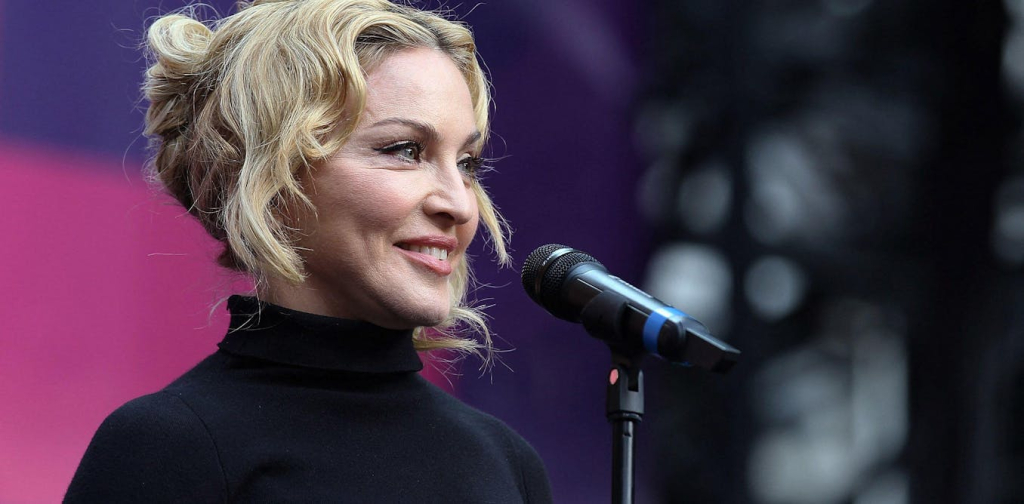

Madonna’s much-anticipated Confessions II has just broken official chart records, making her the first American woman to earn number one albums across five decades. It’s her tenth number one record.
A kind of sequel to 2005’s Confessions on a Dancefloor, it marks a euphoric return to form, released seven years after her last album, Madame X (2019), and two decades since the first Confessions last earned her good reviews.

What’s surprising critics and fans is not just the quality of the music, which sees Madonna and Confessions producer Stuart Price lovingly reference Chicago and Detroit house music, but the vulnerability of her lyrics.
Often characterised by defiance, the singer has always had moments of intimacy in her songs, yet she’s never fully engaged in the confessional mode that bolster contemporary superstars like Taylor Swift. Confessions II might therefore be a spiritual sequel to Confessions on a Dancefloor, but the new album is both sonically different from the 1970s aesthetic of its precursor – and much more radically, movingly, confessional.
Confessional pop music
Confession has been one of pop music’s top currencies since the mid-20th century. Coinciding with the emergence of a confessional mode in poetry, in the 1960s and 1970s singer-songwriters like James Taylor, Bob Dylan and Joni Mitchell gained widespread popularity for records which were considered “radically introspective”. Like the confessional poets, these records often “confessed” to intimate failures and experiences of shame, including details of mental health crises, affairs and the end of relationships.
Today, pop music is overwhelmingly assumed to represent the artist’s life. From the lyrical disclosures of Lily Allen’s West End Girl (2025) to the confession booth segment of Rosalia’s Lux tour, many singers trade in the drama of confession. Sometimes they reference its religious, legal or psychoanalytic role as an act of truth-telling and repentance, but more regularly they draw on its secular meaning of revealing secrets and airing personal grievances.
In today’s media landscape, where personal branding often relies on a star’s ability to communicate openness and relatability, confessional address offers singers what musicologist Allan Moore calls “first-person authenticity”, implying an almost unmediated communication between the artist and their audience.
This is what Taylor Swift does so successfully in both her lyrics and the “easter eggs” placed throughout her music, building a complex history of her work and private life that’s most legible to devoted fans.
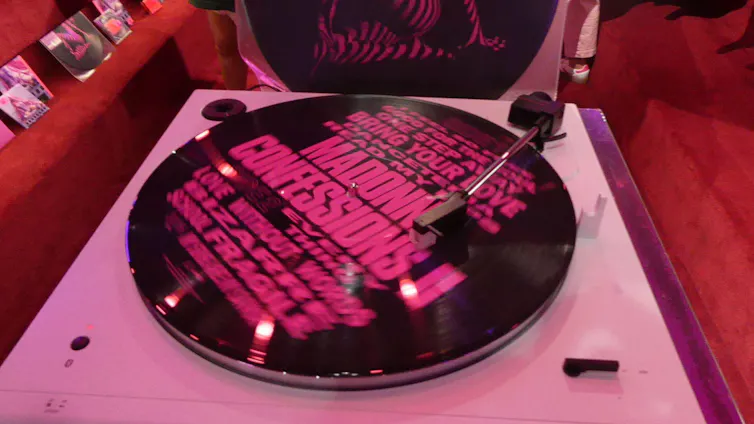
Madonna’s synthetic intimacies
The ultimate postmodern popstar, there is possibly no one less relatable than Madonna.
Since 1982, the singer has experienced almost peerless fame, marked by fearless reinvention and never-ending controversy. This is the woman who Michael Jackson once described as a “nasty witch”, who called David Letterman a “sick fuck” while smoking a cigar on live TV. She’s also the woman who pioneered celebrity HIV/Aids activism, funding medical treatment for friends and including a Facts About Aids insert in her Like a Prayer album in 1989.
One of the ways Madonna used her fearlessness, and which she returns to in Confessions II, is in her defence of dance music as community and refuge.
The first half of the new album frames dancing as a space for intimacy through anonymity rather than confession. The opening song, I Feel So Free, introduces the singer hiding “in the shadows”, creating “a new persona” on the dancefloor.
Both this and the invocation of freedom in the song’s title recall earlier work like Into the Groove (1985), where a 26-year-old Madonna joyfully proclaimed: “Only when I’m dancing can I feel this free / At night I lock the door where no one else can see.”
The album moves between the public and the private, the communal and the individual, deepening the experience through musical nods to Madonna’s vast catalogue. The drums on Bring Your Love remind us of Vogue (1990), and elements of Danceteria recall Music (2000). These references make the songs feel intimate even where their lyrics are broad, mining the rich history Madonna has with her fans and drawing on shared feelings of freedom, joy, and escape to be found on the dancefloor.
Madonna’s confessional turn
Reviewers have been quick to note that the last half of Confessions II is where the songs are most confessional. While some have speculated that Read My Lips is about Madonna’s divorce from Guy Ritchie, the singer has confirmed that Fragile was written about her brother, Christopher, and The Test reflects on her relationship with her daughter Lola.
A common trope of confessional poetry is the use of proper nouns to attach the singer’s emotions to real people. In Bizarre, a reference to the Shelby Cobra, a car Madonna bought for Sean Penn on their wedding day, seems to confirm the song is about him.
While such details might be fun for internet detectives, the more radical use of naming comes in earlier songs like Danceteria, which memorialises a space and community that no longer exists. Named after the New York club where Madonna first performed in 1982, the song’s generalised chorus – “Everybody get up and dance” – is countered by verses that are lengthy lists of real attendees, many of whom – Martin Burgoyne, Haoui Montaug, Keith Haring – died of complications from Aids.
This feels like a kind of intimacy only made possible by Madonna’s life in the past decade. Co-producing her own (currently stalled) film biopic, and experiencing several bereavements and ill health, the new album feels both newly creative and intensely reflective. It is more revealing of Madonna than anything else in her career.
In confessional terms, it also does something frighteningly rare in pop by admitting to fallibility. On the first Confessions album, singles like Sorry repeat the title in seven different languages but it’s never clear who’s being asked to repent. On Confessions II, in The Test, Madonna admits to her daughter Lola: “I didn’t think of how it could disturb / Or how it hurt / I wish I knew, the pain I caused…”
The mistakes here are Madonna’s and she’s finally ready to forgive.













Comments are closed.