


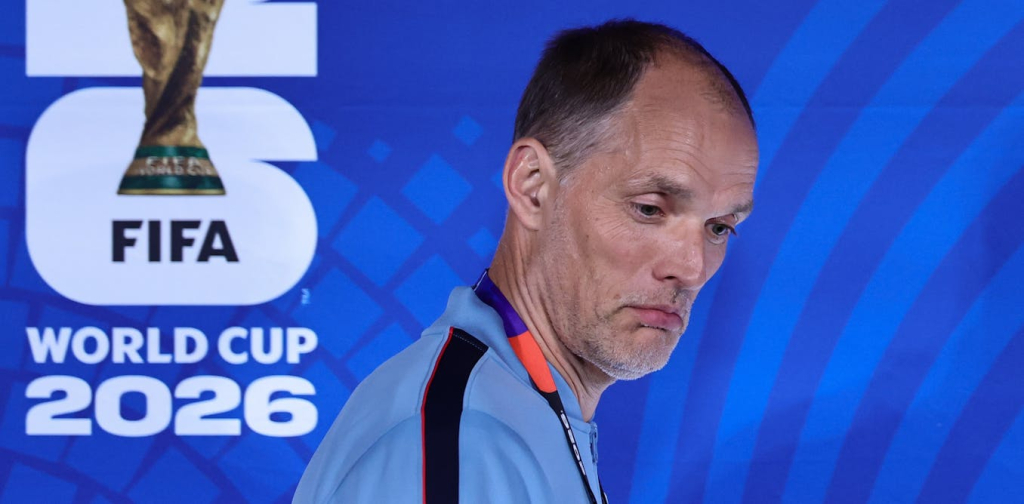

As a football coach, Thomas Tuchel has done things differently to many of his colleagues.
For example, it is extremely rare for lower league footballers to become the head coaches of top sides. But that’s what Tuchel did, playing as a defender in Germany’s bottom tiers, before going on to manage elite teams like Paris Saint-Germain and Chelsea.



It’s also unusual for youth team coaches to become coaches to senior sides, or to make the leap from coaching relatively small clubs to some of the bigger clubs in the world. Tuchel, England’s head coach, has made these switches too, and in doing so has demonstrated two particular managerial skills: awareness and adaptability.
The two qualities complement each other. A strong sense of awareness is required to effectively assess situations and players, and then recognise how and when a team might need to change its approach. It requires the ability to evolve and mature.
And a distinct aspiration for Tuchel is not to remain the same coach that he has been in the past. He has said: “[You] need to constantly adapt your style to what is needed, and to your group, and to change yourself, and to develop and to grow.”
He is also known for his perfectionism and dedication. And according to a former colleague, his total commitment to a cause can galvanise a group if it is harnessed correctly.
The colleague said: “Extraordinarily good coaches like him are very intense, that’s part of the deal. They live and breathe football, and that attitude transmits to the team.
“They want to do everything well, and that creates a strong feel for the collective. Everybody wants to give their all, every day, every game. That’s why teams immediately get better once he starts working with them.”
Tuchel retains very high expectations of performance. He does not mask his displeasure on the sidelines, and is not afraid to tell players when they are not playing well. But his methods involve much more than direct criticism.
For instance, after visiting a professor at Mainz University in Germany, Tuchel became an advocate of a technique known as “differential learning”, which emphasises variation rather than repetition of movement in football training. It also involves presenting players with a wide variety of obstacles that demand constant adjustment, while embracing the fact that players and opposing teams are all different.
So Tuchel began to tailor practice sessions to continually challenge and stretch his players. There would be extreme variation in pitch sizes for example, or particularly difficult drills.
Tuchel said of this more creative style of training: “That influenced me a lot, because it changed my role as a coach completely.
“With this [approach] there is no right and wrong. I’m just responsible for the ideas and principles of how we play. Within those they are free to find their own solutions.”
The overall idea for Tuchel is that training ends up being so testing and so demanding, that competitive matches seem comparatively easier to cope with.
Shape-shifter, trophy winner?
Tactical versatility has also been a defining feature of Tuchel’s method. He is well known for his in-game changes, where a side might switch formation six times during a match. He wanted his players to learn to constantly adapt to new roles, shapes and systems.
However, Tuchel has recently explained that if you switch formation too often, players can be conditioned to always look to the coach for a solution. Instead they should be concentrating on how they flexibly apply fundamental defensive and attacking principles, regardless of changes in tactics.
So again, Tuuchel is open to change. He wants to empower his team to make adjustments, without always looking to him for the answers.
To him, awareness and adaptability are crucial qualities required for effective management. This means having the confidence to follow a well-formulated course of action, but also the modesty to appreciate the limits of your capabilities and remain receptive to alternative solutions.
As Tuchel has commented: “I can do it my way, but I never want to say, ‘I know how it’s done.‘
“I know nothing. I just try my things, and every day is new. There are lots of people out there in business who say they know how it’s done. But there’s not just one way to do things. You have to adapt.”















Comments are closed.