


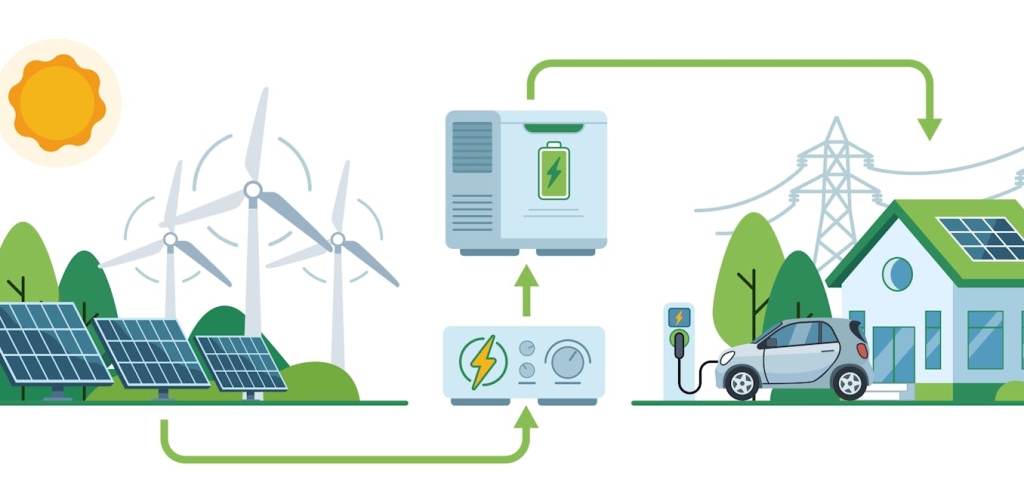

Across Europe, running a home – whether you need to keep it cool in the summer or heat it during winter – usually means burning imported gas. That wastes energy and creates carbon emissions, contributing to climate change. The European Commission’s new electrification action plan aims to end that era, mapping out a drive to double electricity’s energy share from 23% to 46% by 2040.
“I have always looked forward to the day that our energy system is based on electrons, not molecules,” said Vangelis Tzimas, who heads an energy policy unit at the European Commission’s science service, in response to this news.



Electrons, not molecules. It sounds abstract, but for homes, it is the difference between a house that burns something and a house that doesn’t.
Buildings consume 40% of all the energy Europe uses, most of it for heating with gas boilers, so this is where this shift will succeed or fail. I measure energy performance as part of my work, through sensors in Irish social housing, and the data points to four reasons why electricity is superior to gas.
The most persuasive one is efficiency. A gas boiler burns fuel and gives you, at best, one unit of heat per unit of gas. A heat pump delivers three to four units of heat per unit of electricity.
A heat pump, essentially a fridge running in reverse, gathers warmth from the outside air and keeps working even in freezing weather. Run it the other way and it cools your home too, which matters more with every record summer.
So why doesn’t every house already have a heat pump? It’s expensive to buy one, and even to run it. Before government grants, installing a heat pump costs around £10,000 in the UK and close to €30,000 (£26,000) in Germany. In contrast, a new gas boiler will only set you back roughly £2,500.
This massive price gap isn’t about the technology. Steep labour costs, high VAT, and a shortage of installers mean the same machine costs twice as much across borders.
These upfront costs are being tackled through subsidies and low-interest loans. In the UK, the government introduced a clean heat market mechanism to try and increase competition and drive down prices of heat pumps by 2027. To fund the transition in the EU, the European Investment Bank is spending €75 billion on grids, storage and heat pump manufacturing.
Upfront bills form half a heat pump’s lifetime expense, but running costs are the real hurdle. Because EU electricity costs three times more than gas, a heat pump’s impressive efficiency is entirely cancelled out at the meter. In the UK, where electricity is 4.3 times more expensive, this greener technology actually costs more to run.

This difference between electricity and gas prices, called the “spark gap”, is partly because taxes are significantly higher for electricity than gas. The European Commission is finally imposing a legal obligation on EU governments to tackle this pricing accident. They are being asked to shrink the gap by 2030 to no more than 2.5 for households, by reducing the tax for electricity; allowing VAT cuts on heat pumps, electric cars and home batteries; and phasing out fossil fuel subsidies after 2030.
Britain has started to close the price gap too. The 2025 autumn budget shifted most green levies off electricity bills and into general taxation, which trimmed the ratio to around 4.3 from 4.7 in April 2026.
These strategies are the right way forward, because countries where the gap is smallest already sell around three times as many heat pumps as those where it is widest.
If the spark gap falls to 2.5, to match a 90% efficient gas boiler, a heat pump needs to generate 2.25kW of heat per kilowatt of power. UK data shows every unit tested beat that benchmark, meaning owners should save money in the long run. Once the spark gap is reduced, the heat pump will become a cheaper way to cool or warm a house.
The European Commission electrification plan puts emphasis on heat pump installations that allow heat-recovery ventilation. These can capture up to 90% of the warmth from outgoing stale air and transfer it to incoming fresh air — meaning heat you already paid for gets reused. The aim is to nearly double heat pump installations that allow heat recovery from 2.4 million a year in 2025 to 4 million by 2030.
The second reason why electricity wins is your home’s carbon footprint. Every time you burn gas, CO₂ exits the flue. An electric home burns nothing. Its emissions depend on how the electricity was made, which is improving every year: around 70% of Europe’s electricity already comes from home-grown clean sources.
That phrase “home-grown” is the third reason, and the one that finally motivated European politicians to commit to change. Molecules must come from somewhere, and for Europe that mostly means abroad; anyone who watched their bills after the 2022-23 gas crisis knows how much that dependence costs.
Electrons can be made at home, from our own wind, sun and water. The European Commission estimates that its plan could cut gas imports by more than 70% and shave up to €260 billion a year off Europe’s fossil fuel import bill by 2040. After which, the prices can be set by the EU’s own investment decisions, not by wars on the other side of the world.
Everything must work together
The final reason is the benefits from energy-efficient homes. It is now four years that I have been monitoring Irish social housing – a mix of new apartments and older dwellings that had a deep energy retrofit (a comprehensive, whole-building upgrade to radically improve energy efficiency).
My sensors record their electricity consumption, indoor temperature, humidity and air quality around the clock. The data shows that homes are more energy-efficient when different measures complement each other: insulation and the fixing of drafty air leaks, correctly sized heat pumps that suit the space, ventilation that keeps air fresh without throwing warmth away.
But even the best kit only goes so far. How we set the thermostat, use appliances, and time our energy use during lower cost off-peak windows matters just as much as hardware efficiency. Occupant behaviour alone can cause heating energy use to vary threefold. This means that our daily choices can result in savings that almost match major technical upgrades (albeit delaying dinner and bath times isn’t a reality for families with young children).
Smart meters make those choices visible. Home energy monitoring apps make it easier for households to shift power-hungry chores to off-peak hours. Add rooftop solar into the mix, and buildings transform from passive energy consumers into localised mini power stations. According to European Commission scientists, rooftop solar on Europe’s 271 million buildings could meet 40% of the continent’s long-term electricity needs.
That is the quiet promise inside “electrons, not molecules”. It’s a system that’s immune to gas shocks that can continue cooling you through heatwaves. Europe has simply decided to make it everyone’s normal.




















Comments are closed.