


Just over a decade ago, at the height of Russia’s bombing campagn in Syria in 2015, an old friend who had spent much of his career teaching in the Middle East sent me two photographs of the city of Homs, which had taken a particularly heavy bombardment at the hands of Vladimir Putin’s warplanes.
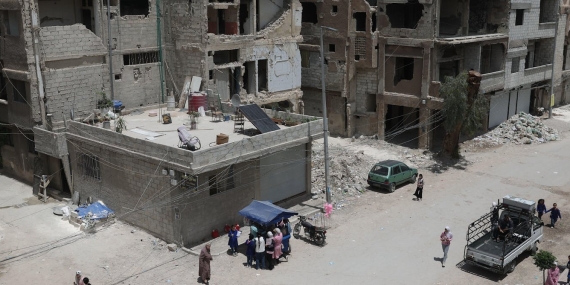
One of the pictures, which had been taken some years previously, was of a cafe on the centre of this city of 1.3 million. It was packed with smiling, well-dressed young men and women and hinted at a vibrant cafe culture in Syria’s third-largest city. The other was an aerial photograph downloaded from contemporaneous news reports which my friend confirmed was the street on which that cafe had sat. It was now nothing but rubble.


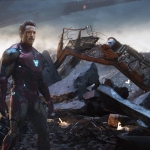
This week our Insights team has published this moving account by three peace and conflict researchers who have travelled through some of Syria’s shattered cities, to observe at first hand how people have been trying to rebuild their lives since the fall of the Assad regime in December 2024. They spoke with many people returning to these cities having fled the violence. They observed food stalls, cafes, repair shops and other small and medium enterprises that had sprung up amid the rubble as people began to rebuild their lives, homes and livelihoods.
The researchers, from the UK’s Durham University and the Bonn International Centre for Conflict Studies, attended the wedding of a friend and recount hearing the joyous zalghouta – the traditional high-pitched ululation so characteristic of celebrations across the Arab world.
As they write here: “hope and hardship coexist. So do recovery and destruction”. Or as someone told them when they visited Damascus: “We sit on the ashes, and everything remains extremely fragile.”
Read more: Journeying through Syria’s shattered cities as they move from war to peace
Iran’s shifting power structure
Something else that remains extremely fragile is the ceasefire in Iran – if indeed it still exists in any meaningful sense. Both sides have carried out strikes this week. The US has hit what it referred to as military targets, including rocket-propelled mine launchers in the Strait of Hormuz (although it also reportedly hit a wedding party, killing several civilians and wounding many others). Iran struck at US military assets in the Gulf.
Tehran is now threatening to launch cyberattacks against energy and water facilities in the US.
Donald Trump, has said he has no plans to talk with Iran, claiming that the US has almost total control of the Strait of Hormuz and that the Iranian economy is close to collapse. He reiterated his call from the beginning of the conflict for the Iranian people to rise against the Islamic Republic.
While there’s no sense that the regime is in any real jeopardy at present, the war has prompted some important power shifts in Iran. Andreas Krieg, a Middle East specialist at King’s College London, explains who’s who in the struggle to control Iran and what that might mean for the future of negotiations with the US.
Read more: War has shifted how power works in Iran
Putin’s paranoia about Britain
One of the policy approaches taken by Keir Starmer as prime minister which his successor Andy Burnham is clearly keen to continue is the UK’s stance as a key ally of Ukraine. Burnham’s first, and so far only, overseas visit since moving into Downing Street has been to Ukraine, where he told President Volodymyr Zelensky that “Britain is 100% behind you”.
Predictably, this drew a harsh response from the Kremlin, several of whose leading lights issued threats that the deeper the UK’s involvement in the war “the higher price it will pay”.
Historian Peter Whitewood of York St John University believes the messaging coming out of Putin’s proxies recently echo a familiar theme. Russia has repeatedly accused the UK of being something of a ringleader in ganging up on Russia.
Whitewood points to a series of episodes in the 1920s, when Britain threw its weight behind Poland in its struggle to remain independent from the Soviets. Then, the Kremlin’s line was – as it is now – that Britain was “always striving to push others instead of itself into military actions against us”. As one Soviet diplomat observed, the Kremlin was inclined to see “the malevolent hand of the British government everywhere”.
Given this was Stalin’s personal belief, there wasn’t much mileage in suggesting it was misguided and it wasn’t until the rise of Nazi Germany that Britain was knocked off its podium as the Soviet Union’s main bogeyman.
Read more: Moscow has a long history of paranoia about Britain’s support for Russia’s enemies
The tragic fate of a Nepalese village
Thousands of people are still missing after the devastating floods that swept through Nepal last week, while the death toll from the disaster continues to mount. One settlement particularly hard hit was the village of Khalte, close to the Trishuli River in northern Nepal.

This village of around 5,750 people included 257 families who had been displaced in the disaster of 2015, when Nepal was rocked by a 7.8-magnitude earthquake. Heaven Crawley, a researcher from Coventry University, spent time working with families there in September 2019 as part of a research project looking at how renewable energy could improve people’s lives.
As she writes here, the local people were well aware of how precarious their village was as it was critically vulnerable to flooding from the Trishuli, which repeatedly flowed into Khalte, particularly during monsoon season. The urgency of finding somewhere safer was further brought home in 2025, when a glacial lake outburst sent floodwaters flowing into Nepal from Tibet.
Now Khalte no longer exists. It was completely swept away in the flooding of August 26. Scores of people are missing. Crawley believes that this terrible tragedy must be taken seriously as a lesson about the urgency of heeding these climate warnings.
Read more: Nepal floods: Khalte residents knew the river could take their camp – and then it did
Inside North Korea’s ‘shadow fleet’
Shadow fleets are the outlaws of the ocean. They are used by countries such as Russia, Iran and North Korea to evade sanctions and are among the reasons why some of the world’s conflicts seem so intractable.
In the latest episode of The Conversation Weekly, Justin Hastings, a professor of international relations at the University of Sydney, describes the tactics that North Korea uses to disguise the identities of its shadow ships – and why it has got away with it for so long.
There’s a superb multimedia piece to go with it, with vivid graphics illustrating the way in which shadow fleets go about hiding their identities.













Comments are closed.