


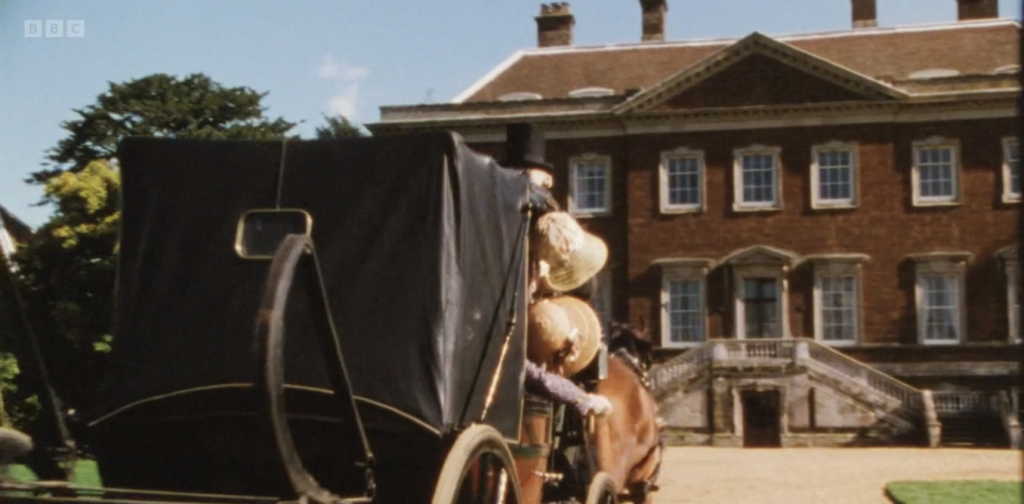

“Netherfield Park is let at last!” go the famous opening words from Mrs Bennet in Jane Austen’s Pride and Prejudice. To her delight, the estate has been taken on by the eligible newcomer Mr Bingley – a “single man in possession of a good fortune” – who brings new marital opportunities for her five unmarried daughters.
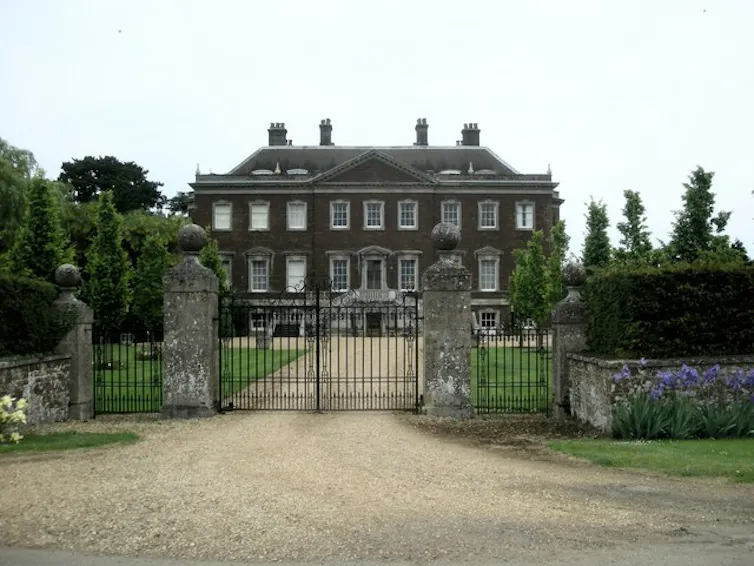
In the beloved 1995 BBC television adaptation of Austen’s Pride and Prejudice, Edgcote House in Northamptonshire was chosen as the location for Netherfield Park. Edgcote is a stunning Georgian manor, built in the mid-18th century, in an elegant landscaped park. In summer 2026, the estate is up for sale – ready and waiting for its next eligible owner (though they’ll need a bit more cash than Bingley’s four or five thousand a year).


But what about the stories beneath the glossy costume-drama world?
In the middle of the 18th century, a young labouring-class woman, Mary Leapor, worked as a servant at Edgcote House. She was also – despite her humble background and lack of formal education – a poet.
Her master at Edgcote House, Richard Chauncy, later recalled that “her fondness for writing verses… displayed itself by her sometimes taking up her pen while the jack [the spit] was standing still, and the meat scorching.” Perhaps unsurprisingly, Leapor was dismissed from Edgcote House in 1745.
Leapor’s poem Crumble-Hall is based on her time working at Edgcote House and was written just before she left. It takes us below stairs to see the hidden stories and secrets of the great English country house.
Leapor writes in the first person, in the guise of a servant called Mira, introducing us to a colourful cast of characters.
In the kitchen, the maid Ursula is doing the washing up, but crushing hard on the servant-boy Roger, who’s eaten too many leftovers and is snoring on the table.
In the poem’s typically comic style, Ursula declares her passionate (unrequited) love for Roger, dedicating all her mundane chores to him.
“Ah! Roger, Ah!” the mournful Maiden cries:
“Is wretched Urs’la then your Care no more,
That, while I sigh, thus you can sleep and snore?
Ingrateful Roger! wilt thou leave me know?
For you these Furrows mark my fading Brow:
For you my Pigs resign their Morning Due:
My hungry Chickens lose their Meat for you:
And, was it not, Ah! was it not for thee,
No goodly Pottage would be dress’d by me.
For thee these Hands wind up the whirling Jack,
Or place the Spit across the sloping Rack.
I baste the Mutton with a cheerful Heart,
Because I know my Roger will have Part.
Her frustrated romantic thoughts, however, are rudely interrupted.
But now her Dish-kettle began
To boil and blubber with the foaming Bran.
The kettle’s boiled, the water’s hot, and she has to get on with the dishes. The servant’s time is not her own. The above-stairs ladies of Jane Austen’s novels get to have their love affairs and romances – but servants can never be the main characters in their own stories.
Mary Leapor also takes us on a tour around the house. And, as the title Crumble-Hall suggests, this isn’t quite the glamorous world we might imagine. Instead, it’s disintergrating, dusty and decrepit. Leapor observes that “Safely the Mice through yon dark Passage run”. And, in the dimness, she says, “Along each Wall the Stranger blindly feels; / And (trembling) dreads a Spectre at his Heels.” Even the Library is full of “dusty volumes”, gathering cobwebs.
In fact, during Mary Leapor’s time there, Edgcote House probably really was crumbling. The new manor house, which we know from the BBC Pride and Prejudice, was built around 1747 to 1752.
Mary Leapor is looking ahead to this major remodelling of Edgcote House and its estate when she takes us briefly, at the end of the poem, out into the grounds. She laments that ancient trees will be torn down “[t]o clear the way for Slopes, and modern Whims”. For Mary, this is a moment of sadness and loss: she foresees a “ravag’d” and “barren” future park: green and elegant, but emptied of the nature and memories she knows.
What paid for this ambitious rebuilding of Edgcote House? Richard Chauncy, its owner, made his vast fortune through the East India Company. This was the joint-stock company formed in 1600 to trade in the Indian Ocean region, which by the mid-18th century was already exercising military power, assuming administrative functions, and effectively forming the basis for the British Empire in India.
Leapor’s poem points us towards the hidden labour below stairs which underpins the English country house – but also the hidden labour, halfway across the world, which pays for it.
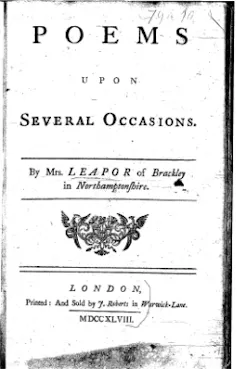
Mary Leapor died of measles in 1746 at the age of just 24. Her poetry wasn’t known beyond her hometown of Brackley, Northamptonshire, in her lifetime. When I wrote about Leapor in my book A History of England in 25 Poems, I couldn’t help wondering: what might she have gone on to write? What sort of poet would she have become?
I like to think that this fearless, radical, witty young woman would have held her own in conversation with Jane Austen – or, even, in the Bingleys’ drawing room. She helps us listen beyond the familiar voices and to see the other, often invisible, stories, beneath the stately homes of England.
This article features references to books that have been included for editorial reasons, and may contain links to bookshop.org. If you click on one of the links and go on to buy something, The Conversation UK may earn a commission.




















Comments are closed.