


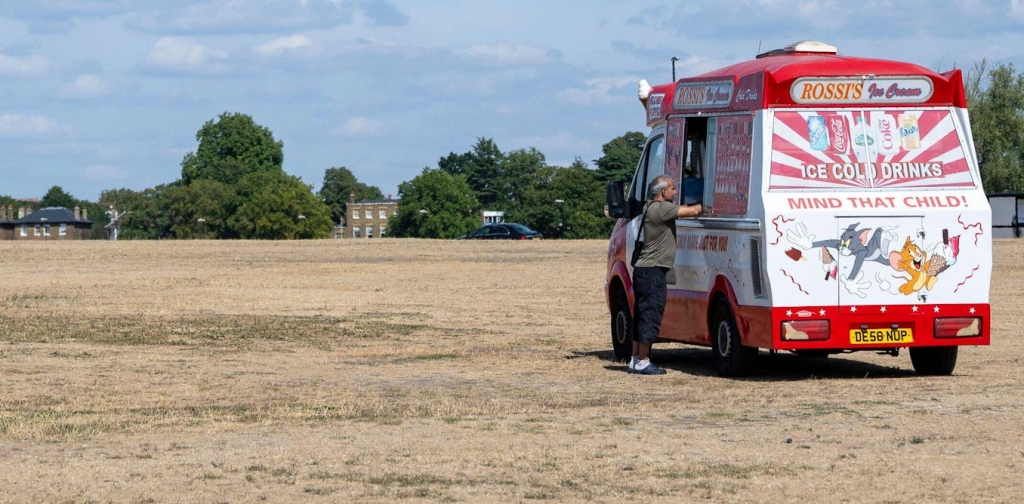

Fields, parks and lawns across Europe have turned to straw this summer. Landscapes thousands of years old have been revealed as green outlines against yellow backgrounds, where ancient underground walls and ditches retain enough water to sustain pockets of grass above them. Lawns and parklands have been especially affected because what water is available is being directed to homes and farms.
July was the driest month ever recorded in England and Wales, and droughts have affected parts of Britain in four of the last five years. As heatwaves become more frequent with global warming, this raises an uncomfortable question for a country that takes particular pride in its greenery: what happens to “England’s green and pleasant land” if summers like this become the norm?



The news isn’t all bad. As a group, grasses are good at surviving dry conditions, and their resilience has helped make them one of the most successful groups of plants on Earth. They now include more than 11,000 species and cover more than 40% of the Earth’s land area, from tropical savannas to Arctic steppe.
They are also much older than scientists once thought. The earliest fossil grasses date to around 55 million years ago, but distinctive mineral deposits in their leaves have since been found in fossilised dinosaur faeces from the late Cretaceous period so we now know that grasses were around tens of millions of years earlier.
Grasslands only spread across the world later, about 20 to 30 million years ago, when they took advantage of a climate that was becoming cooler and more arid. In those conditions, grasses could survive better than many other types of vegetation.
British grass is used to damp summers
The main grasses used in British lawns, however, are not necessarily as well adapted to dry conditions as some of their relatives elsewhere. But even species already native to northern Europe and well adapted to cool, damp conditions have ways of surviving drought. They can slow water loss from their leaves and, where possible, send roots deeper into the soil in search of moisture.
But under really dry conditions, such as those we are seeing at the moment, they have no choice but to shut down and wait for better conditions. They move what water remains to the parts of the plant that will produce new leaves, which are protected deep inside the outer leaves. These outer leaves dry out and die, giving some of their water to the critical growing parts, which survive and are ready to produce new leaves when it rains again. The growing centres also accumulate sugars that help draw in water and protect their cells from drying out.
That’s why a yellow lawn can be deceptive. After previous droughts, apparently dead expanses of stalks have slowly recovered when rain comes back. Our lawns will return this time too.

But they will still dry out again in future summers. In much of the world, grass is green in winter and yellow in summer. Is the British public willing to accept this as the norm? If not, it may make sense to introduce different varieties that are better adapted to warmer conditions, although these may be less suited to Britain’s colder months.
Weird weather, yellow grass
One problem is that it isn’t necessarily easy to guess what the new normal will be, or even if there will be one. Climate change isn’t just making the weather warmer, it is also making it less predictable, a phenomenon that has been called “global weirding”.
July 2026 in Britain was exceptionally dry, as it was in 2022, but rainfall was 70% above average in July 2023. Which do we plan for?
To some degree, people in Britain and similar countries could alter their lifestyles to adapt to new conditions if they are consistent (even if countries nearer to the equator cannot). But ultimately there’s no magic grass variety that will keep Britain green and pleasant whatever the weather. Instead, the public may need to accept that lawns will be yellow during dry summers. In a warmer, less predictable climate, adapting to the new environment may mean rethinking what we expect parks and gardens to look like.


















Comments are closed.