


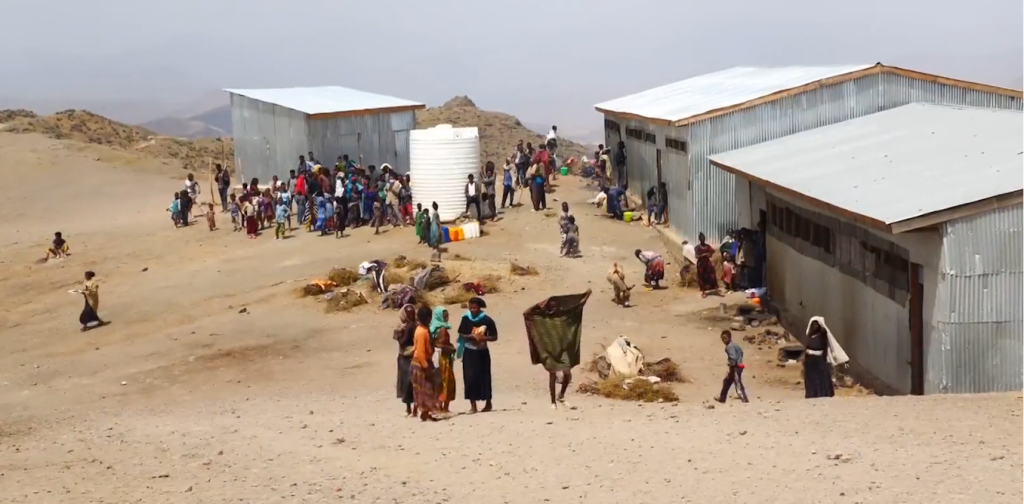

The Ethiopian federal army and Tigrayan forces have resumed their war, having failed to turn the November 2022 peace deal into a lasting political settlement.
The Tigray war of 2020-2022 was one of the deadliest conflicts of the 21st century. The war was driven by ethnic hatred, which the Ethiopian government and allies fomented and used to mobilise violence against Tigrayans.


The war caused enormous loss of life, mass displacement and widespread destruction. It drew in Ethiopian federal forces, Tigrayan forces, Eritrean troops and other armed groups.
Fighting ended when the Ethiopian government and the Tigray People’s Liberation Front signed the Pretoria ceasefire deal in South Africa. The African Union brokered the peace agreement, which the US and EU supported. It provided for the protection of civilians and disarmament of Tigrayan forces.
Many of the political and territorial disputes that fuelled the war were left unresolved, however.
Large numbers of people remain displaced. Territories occupied by Amhara and Eritrean forces during the war have yet to return to Tigrayan administration. Accountability for wartime abuses has been limited, and the parties involved don’t trust each other.
In August 2026, fighting broke out again in western Tigray between Tigrayan and Ethiopian federal forces. There have been drone strikes and attacks on civilians in southern Tigray, Mekelle and other areas.
These incidents follow clashes earlier in 2026.
I have researched and written about the war since its start. In my view, the Pretoria agreement has not yet provided a pathway towards an improved political and security environment. But it remains the best available framework. It brought large-scale fighting to an end and contains commitments that address some key unresolved issues. These include the return of displaced people and justice processes.
The recent confrontations in Tigray, however, are a sign that the ceasefire and peace process have seriously derailed.
The priority must be to stop localised clashes and violence from developing into full-scale war. This requires five things:
-
implement and, where necessary, improve the Pretoria agreement
-
political renegotiations
-
establish an independent mechanism to address wartime atrocities
-
protect civilians, particularly young people, from forced mobilisation
-
resolve the displacement crisis.
1. The Pretoria peace deal
The first task is to return to the Pretoria agreement, implement it and improve it where necessary.
The agreement was imperfect. It left difficult legal and political questions unresolved. These include control over annexed territories, responsibility for protecting civilians, and justice and accountability for crimes committed during the war.
But its shortcomings are an argument for completing and improving the agreement. The immediate priority should be to stop the fighting, and strengthen mechanisms for dialogue and implementation.
The international community should put implementation of the agreement at the centre of engagements with Ethiopia.
2. The political calculations driving escalation
Ethiopia’s federal government must be pressed to exercise restraint and return to meaningful political negotiation. Military force and coercion cannot become the first choice for resolving disputes.
Tigrayan political and security actors must likewise recognise that political disagreements cannot be sustainably resolved through armed mobilisation.
External powers should not be permitted to turn Ethiopia’s internal political disputes into a wider contest for influence.
The involvement of the United Arab Emirates, Eritrea and others supporting the warring parties should be addressed through transparent diplomacy. Their competing interests risk fuelling a wider confrontation.
Eritrea is particularly important. It played a major role in the 2020-2022 Tigray war. Further, tensions with Ethiopia have grown over a shared border and the Ethiopian government’s desire to annex Eritrean ports. Preventing another war in Tigray, therefore, requires addressing the wider regional security environment.
The objective should be to reorganise political relationships around de-escalation rather than confrontation.
3. End impunity
Impunity breeds violence. When perpetrators of atrocities are not held accountable, victims and communities receive the message that violence can be repeated without consequence.
Renewed violence and reports of attacks against civilians underline the dangers of leaving past abuses unresolved. Many scholars argue that the atrocities committed during the 2020-2022 war amounted to genocide, crimes against humanity and ethnic cleansing.
Accountability must apply to everyone.
Crimes committed during the previous war should be investigated, no matter who the alleged perpetrators were.
Where domestic institutions cannot credibly investigate or prosecute cases, international actors should consider establishing an independent judicial mechanism or tribunal with sufficient independence and expertise.
There is currently no credible accountability mechanism in place. Previous initiatives have been dismantled following opposition from the Ethiopian government.
4. Stop forced conscription
Civilians and combatants must be protected from another cycle of mobilisation.
Reports of the forced recruitment of young boys and girls by both the Ethiopian government and Tigrayan authorities are alarming. No political authority or armed group should compel young people to war because political leaders have failed to resolve their differences.
The previous war demonstrated the enormous human cost of mass mobilisation. Renewed mobilisation would make de-escalation harder as each side became more invested in conflict.
Demobilisation, disarmament and reintegration must be treated as essential parts of the peace process.
5. Resolve the displacement crisis
The return and resettlement of internally displaced people cannot be separated from the territorial questions that forced them from their homes.
Displacement should not become a permanent consequence of war, nor should occupied territories remain indefinitely under the control of armed militias.
Resettlement must be voluntary, safe and dignified. It should begin with restoring the political and security conditions that make return possible.
Read more: Millions of Africans are displaced without crossing a border – and their needs are often overlooked
The window is narrowing
War is already in Tigray, both in rhetoric and practice. Another full-scale war is not inevitable. But preventing it requires a change in approach.
The African Union and its peace envoys bear part of the responsibility for the derailment of the ceasefire process. Implementation was not followed through consistently.
A ceasefire cannot hold on paper alone. It requires sustained monitoring, political engagement and pressure on the parties to honour their commitments.
The Pretoria agreement stopped the bloodshed once. The window to prevent another catastrophe has not closed. But with violence resurfacing, it is narrowing rapidly.
















Comments are closed.