


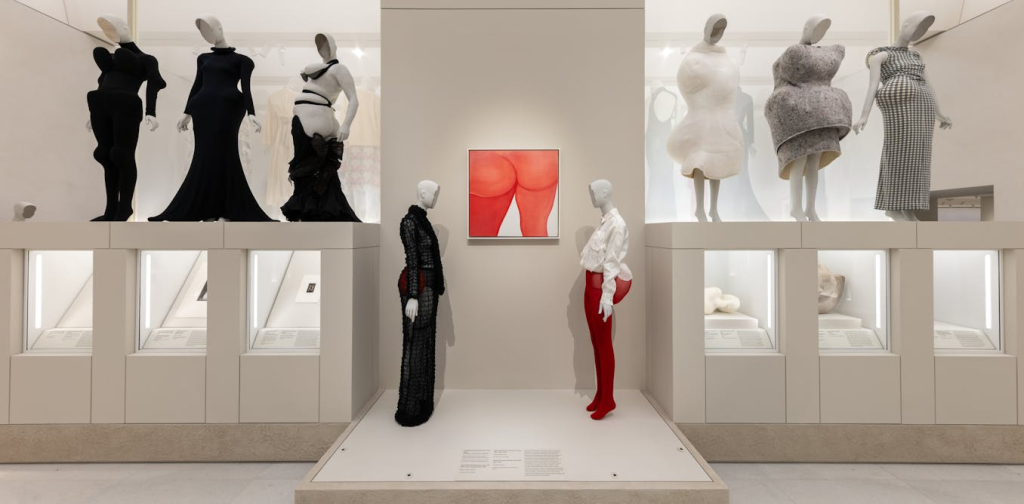

Organised by Vogue, the Met Gala this year was based around the theme of “costume art”. An accompanying exhibition of the same name opens at New York’s Metropolitan Museum of Art on May 10, with a focus on the dressed body.
Responses to the Met Gala – the US fashion event of the year – and its related Costume Art exhibition have been sharply divided. On the one hand, critics have applauded the exhibition’s use of an inclusive range of mannequins, representing a wide group of bodies that go far beyond the normal “model physique”.



On the other, this apparent celebration of diversity has been contrasted with the overwhelming thinness of the red carpet at the Gala, as well as the involvement of its honorary chairs, Amazon founder Jeff Bezos and his wife Lauren Sánchez Bezos. The couple were said to have sponsored the event to the tune of $10m (£7.4m), sparking calls for a boycott.
As the influential fashion commentators Diet Prada noted, this year’s Met Gala was more poorly received than ever before, with speculation rife about why some celebrities were missing the event.

As artwashing is now an established media tactic, the positive elements of the exhibition could be viewed as a distraction from the negative capitalistic associations of its sponsors.
However, in an age dominated by Ozempic and other GLP-1 drugs, an exhibition celebrating bodies of all shapes and sizes does far more than pay politically expedient lip service to the idea of diversity.
Diversity fights back
The exhibition – masterminded by Andrew Bolton, the British-born curator of the Costume Institute at the Met – pairs garments and artworks “organised into a series of thematic body types that reflect their pervasiveness and endurance through time and cultures”.
The choice of these thematic body types – which divide into sections including the Naked Body, the Classical Body, the Ageing Body and the Disabled Body – had been the subject of media coverage long before column inches were filled with the usual discussions of celebrity outfit choices.
Over the past month, a series of articles and related social media posts have trailed that the show would feature a physically diverse array of mannequins. This would support the exhibition’s stated aim of exploring distinct bodies across time and space. On April 21, sculptor Frank Benson – most famous for his figurative works – posted on social media that it had been the “honour of a lifetime” to create a group of mannequins for the Met’s show.
These newly commissioned mannequins allow the show to present its garments on an array of bodies – variously abled, fat and thin, and in different states of pregnancy and undress. These are not one-off pieces. As Benson confirmed, the mannequins will be transferred afterwards into the Costume Institute’s permanent collection and used in future exhibitions.
Each of the figures wears a mirrored mask, encouraging viewers’ identification with these more “realistic bodies”. In so doing, the curators utilise a highly literal but effective means of reflecting the norm within clothing and spaces usually reserved for the thinnest of bodies.

Alongside the forms of the mannequins themselves, “the Corpulent Body” (the Met’s somewhat unfortunate wording) is also invoked through specially commissioned photography and fashion design, including work by designers Karoline Vitto and Michaela Stark.
Stark has created some of her highly recognisable undergarments that truss the body in silk organza ties – resulting in pockets of fat and bulging extrusions that encourage speculation on what the beautiful erotic body might look like.
Is there a future for body positivity?
Despite this, recent data from industry insiders suggests a broader backward slide in representation that counters the narrative pushed by the exhibition. The model Felicity Hayward has done pioneering work season after season recording plus-size representation on the runways: the autumn/winter 26 lineup (shown in Europe and US in February) had the lowest numbers of size inclusive models for years.
Of the 3,840 looks shown at New York Fashion Week, only 20 were shown on plus-sized bodies. This was a staggering 50% lower than it had been the previous year.
Vogue Business interviewed a number of casting directors on this notable shift. One, Chloe Rosolek, described this “regression in inclusion” as the literal “erasure of women’s bodies”. The Costume Art exhibition seems to stand firm against this shift.

But as many social media observers have noted, the exhibition’s attempts at representing equality and body positivity feel at odds with a red carpet that was populated by an ever-thinner group of celebrities. With weight-loss easier to achieve than ever thanks to the widespread use of GLP-1 drugs, many figures in the public eye have appeared to lose significant amounts of weight.
The Gala guestlist did include a more diverse crowd, including the disabled transgender model Aariana Rose Philip, whose body one of the mannequins was based upon. But in event roundups dominated by influencers, singers and actors, this bodily diversity makes little impression.
While Instagram feeds suggest the most important and fashionable of red-carpet appearances belong to the thinnest bodies, the exhibition itself does seem to achieve its goals in furthering representation of diverse bodies. And it does so on one of the most influential and public stages.

Fat studies scholar Jeannine A. Gailey argues that people who are fat are simultaneously paid undue attention on account of their “taking up too much space”, and are also ignored due to the perception of fatness as both undesirable and morally questionable.
Conversations around what kind of bodies are valued through forms of representation feel very relevant to the aims of Costume Art, thanks to its prominent portrayal of fat, ageing and disabled bodies.
Despite its problematic associations with Bezos, Costume Art nevertheless provides a highly visible – and thereby meaningful – counter to the world of ever-shrinking thinness that Hollywood appears to cling to, perhaps offering the body positivity movement a much needed life raft. However, now that anyone can access these weight-loss shortcut drugs, one wonders how long body positivity can remain afloat.






















Comments are closed.