


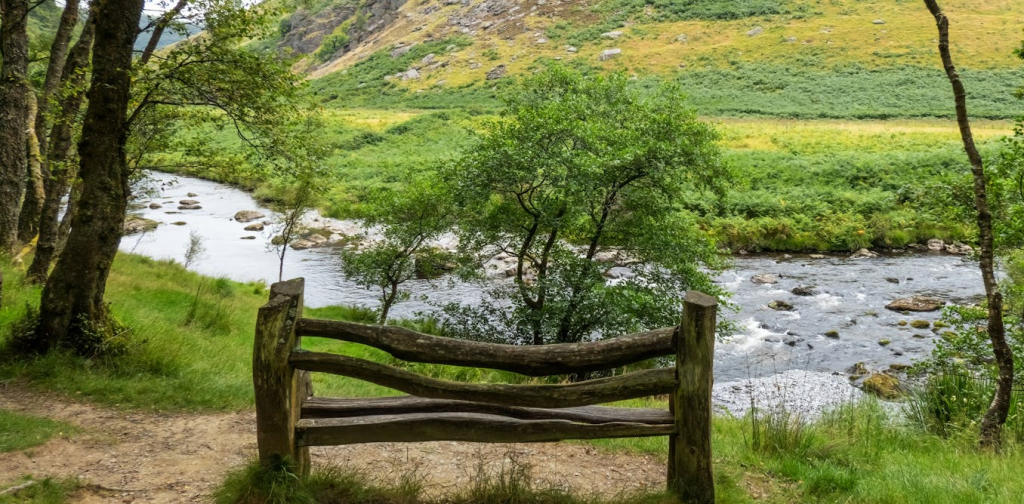




Nature is critical for our national health, wellbeing and security. Most national leaders haven’t really taken this on board yet because it is just too big an issue to handle.
But, as I explore in my new book, this happens partly because many western societies are based on freely extracting resources from nature.
Many societies have evolved to exploit the ecosystem services (the many and varied benefits that people gain from nature) that we get for free. Admitting this puts our leaders in a difficult situation when trying to explain why we aren’t doing a better job of looking after nature.
The UK government recently conceded that the collapse of ecosystems represents a critical risk to our food, security and finances. This is because the UK is one of the most nature-depleted countries in the developed world, ranked in the bottom 10% of all countries. That low biodiversity leads to ecosystems that are less resilient. This makes the risk of ecosystem collapse more acute.
It can also be hard for governments to prioritise the risks of ecosystem collapse above conflict, energy poverty and food supply chain issues. Especially when these risks are often thought of as being long-term and difficult to quantify. Instead, governments might argue that membership of certain conventions and treaties commit us to protecting 30% of our land and sea to nature conservation by 2030. So there is a plan to restore nature in the UK.
Despite that, governments consistently misunderstand the depth to which our society depends on functioning healthy ecosystems and how acutely exposed we are as a country – so we underestimate the risks of it all going wrong.

The UK National Ecosystem Assessment was a national stocktaking of the state of our national natures. It did its best to highlight these ecosystem risks in the early 2010s – but really only set in train a narrative that “ecosystem risks are economic risks”. And economic risks can always simply be traded-off, offset or commodified. But ecosystem risks are not simply economic – they are existential to society and the state.
National nature restoration ought instead to be a security-framed issue for government. One way through this would be for states for adopt the mission of national nature restoration as their central organising principle. This means a narrative that sets the rules and terms of reference across the whole of government – for policy, institutions and the economy.
A mission-led nation
Wales is a great example of how this can work. For the past two decades the Welsh government has made sustainable development its central organising principle. We have learnt from the Welsh experiment that trying to wrap the entire business of a government into a single narrative is politically risky and challenging.
Moreover, to be politically successful these narratives have to be inclusive across society, emotionally and materially compelling for citizens and plastic enough to encompass a range of different functions and policy agenda.
Nevertheless Wales has shown us that adopting mission-led central organising principle of this kind are possible. Analysis by the Organisation for Economic Co-operation and Development (a global policy forum), the Institution of Environmental Sciences (a global professional membership body for environmental scientists), Carnegie UK (a charitable foundation that aims to improve wellbeing) and others show how the Welsh experiment of making sustainable development the central organising principle of the state has improved people’s health, education and wellbeing.
The carbon footprints associated with Welsh households fell by 37% between 2001 and 2020. Wales is a world leader in household recycling, with a 65.7% recycling rate for local authority municipal waste in 2022-23. In 2015, public service boards of local leaders were created to deliver wellbeing outcomes for places and people in Wales. These have ensured accountability and successful implementation of plans. The Welsh model of sustainable development inspired the creation of the UN Declaration of Future Generations which combined 56 rules for sustainable development that ensure no one is left behind in the green transition.
Although there are different visions for what nature restoration means, research shows that the British voting public care about the idea of restoring our lost nature. In challenging and uncertain times, a national cause of nature restoration offers countries the chance to reclaim and own a progressive mission – and perhaps even build new political coalitions that offer a sense of national purpose and unity.




















Comments are closed.