


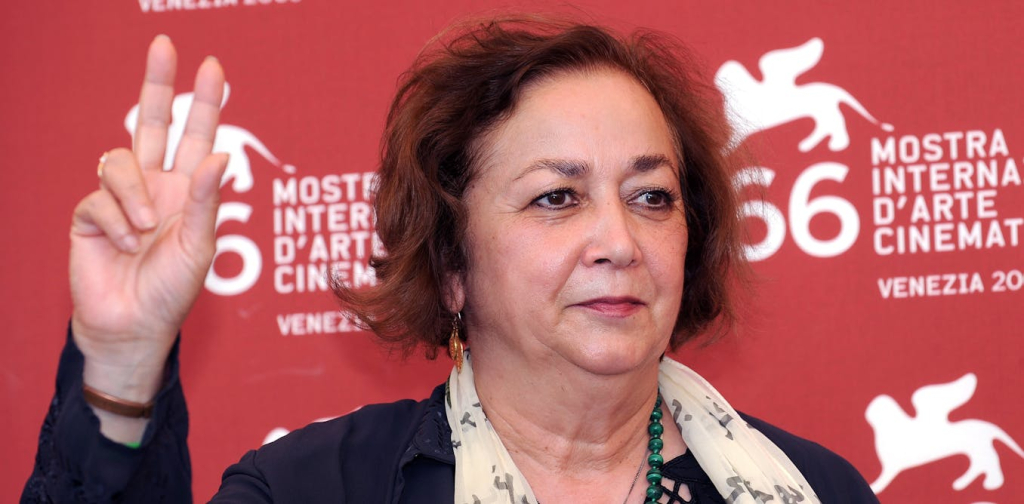

The death of the Iranian novelist and feminist writer at the age of 80 marks the loss of one of the most courageous and original voices in modern Persian literature. For more than five decades, Parsipur wrote women into spaces from which they had often been excluded: history, politics, spirituality and even storytelling.
Imprisoned under both the shah and the Islamic Republic, censored, banned and eventually exiled, she remained committed to a simple but radical idea: women deserve to be the authors of their own lives.

Born in Tehran in 1946, Parsipur entered Iranian literature at a time when female writers occupied only a small corner of the literary landscape. After studying sociology at the University of Tehran in the late 1960s, she emerged as part of a generation of female writers who transformed the modern Persian literary landscape.
After the pioneering work of academic and writer Simin Daneshvar, Parsipur came to be recognised as a distinctive voice in a wave of female authors who expanded the possibilities of modern Persian fiction. After publishing short stories and novellas throughout the late 1960s and early 1970s, Parsipur published The Dog and the Long Winter in 1976, further establishing a literary career that would eventually make her one of the most influential voices in modern Persian literature.
Parsipur’s commitment to speaking openly about power and injustice came at a heavy personal cost.
In the 1970s, while working as a producer and editor for Iranian National Television, she resigned in protest after the execution of two poets by Savak, the shah’s secret police. Her opposition to repression led to her first imprisonment.
The 1979 Revolution did not bring greater freedom to Parispur. After returning to Iran from France, where she had been studying Chinese language and civilisation, she was arrested again and spent four years and seven months in prison during the 1980s.
Rather than silencing her, those years deepened her determination to write. Soon after her release, she published Touba and the Meaning of Night, the novel that brought her widespread recognition among Iranian readers. She later documented her experiences of incarceration in Prison Memoir and Kissing the Sword). International recognition followed, including in 1994 the Lillian Hellman–Dashiell Hammett Award for writers persecuted for exercising their freedom of expression.
What distinguishes Parsipur from many political writers is that she never reduced literature to ideology. Instead, she used imagination to expose systems of power. Her novels are filled with women searching, not simply for rights or equality, but for meaning, autonomy and selfhood.
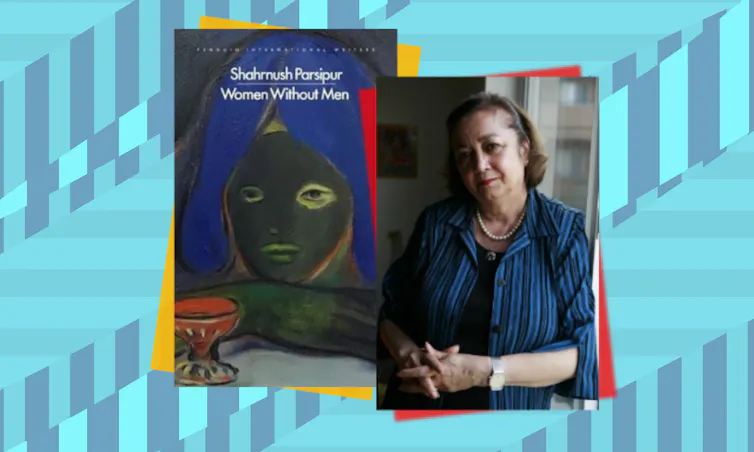
In Touba and the Meaning of Night, Parsipur followed a woman’s search for spiritual meaning against the backdrop of 20th-century Iran’s political upheavals, placing female experience at the centre of the nation’s history. Women Without Men further developed this through imagining entirely new possibilities for women’s lives. First published in 1989 and later banned in Iran because of its frank engagement with female sexuality and social taboos, Women Without Men went on to become Parsipur’s most widely read and celebrated work.
Part fable and part political allegory, the novella follows five women searching for freedom beyond the limits imposed by family, convention and authority. Through magical and often surreal encounters – including a woman who becomes a tree – the novel envisions new worlds of possibility for women.
Read more: Women Without Men: the feminist book that Iran’s regime has failed to silence since the 80s
Censorship only amplified the novel’s impact. Banned in Iran and circulated informally for years, Women Without Men became an underground classic.
In March 2026, its first full English-language translation introduced Parsipur to a new international readership and earned a place on the International Booker prize longlist. More than three decades after its original publication, the novel’s questions about women’s freedom remained as urgent as ever.
Read more: Women Without Men: a novella that tells the history of Iran through women’s bodies
Parsipur spent a lifetime asking what might happen if women stopped seeking permission to be free.
In 1994, Parsipur left Iran for California. Exile gave her safety, but it never gave her distance. Iran remained the backdrop to her writing, her politics and her hopes for the future, even after decades abroad.
Even in her final public interventions, Parsipur remained fiercely independent. During the recent military conflict involving Iran, she opposed foreign military intervention, arguing that “freedom cannot be given to Iran from outside” and that “the people of Iran themselves must win their own freedom”. Her position was entirely consistent with a life spent resisting all forms of domination – whether exercised by monarchs, religious authorities or foreign powers.
Shahrnush Parsipur leaves behind a body of work that transformed Persian literature, but also something less tangible and perhaps more lasting: a powerful example of how to speak, write and live without surrendering to fear.
Throughout her life, Parsipur refused to accept the limits imposed upon her – as a writer, as a woman or as a citizen. That refusal became the defining force of both her life and her work.
This article features references to books that have been included for editorial reasons, and may contain links to bookshop.org. If you click on one of the links and go on to buy something, The Conversation UK may earn a commission.













Comments are closed.