


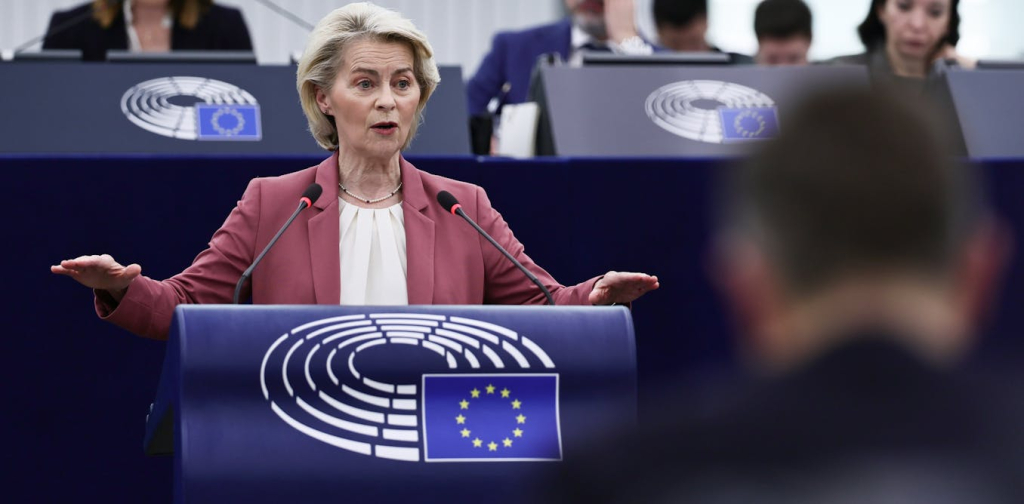

The US military operation against Iran has demonstrated in the most dramatic terms the need for EU autonomy in global affairs. Responding to the situation, European Commission president Ursula von der Leyen has called for a new EU foreign policy to guide the bloc towards “European independence”.
But it is not enough for the EU simply to set itself against the Trump administration. It also needs to resolve a muddled “illiberal liberalism” that afflicts the way it has begun to pursue European autonomy. The EU can’t currently seem to decide whether it seeks independence so that it can preserve the liberal order or so that it can move beyond it.

The second Trump administration has supercharged the EU’s push for independence. It has prompted European governments to get far more serious about reducing their military and security dependence on the US and to reduce their broader external trade vulnerabilities. This is now the unrivalled driving force behind most European foreign and security policies.
But criticising the current US administration does not in itself amount to a vision for the EU’s place in the radically changed international order. Current debates have become unduly narrowed down to a focus on decoupling from and standing up to the US. This creates a false sense of comfort, as reacting against Trumpian excess is more straightforward than defining a coherent order-based geopolitical vision. The EU needs to ask not just what it is against but what it is for, and this remains unclear – at least, beyond rhetorical cliches.
An overly self-satisfied celebration of incipient EU resolution against the US – over Iran, Venezuela, Greenland, tariffs – draws the bloc away from clarifying the ultimate goal of toughened European autonomy.
In all this, the EU shows signs of what in psychology is known as “downward coping syndrome”. It seems to be feeling unjustifiably righteous about itself in comparison with the abominably low-standards of predatory diplomacy and illegality set by the Trump administration.
French president Emmanuel Macron’s speech at the Munich security conference, in which he merely ran through all the ways in which Europe stands in favourable contrast to the US, was an especially egregious case of this. Commentators also repeatedly celebrated the superiority of European rhetoric on peace, freedom, and rules and democracy compared to Maga’s civilisational chauvinism. These perspectives set a very low bar and do not interrogate whether European policies actually follow through on their own stated principles.
An illiberal turn
In practice, the EU is itself retreating from the very same liberal norms that it rightly excoriates the US for having jettisoned. Even if this policy drift is, of course, far more subtle than what is occurring in US foreign policies, it raises questions about what the EU really seeks to do with its emerging strategic autonomy.
At present, contradictory logics abound as the bloc advances towards greater independence. The EU is striking partnerships with illiberal regimes like the Gulf states and autocracies in Asia ostensibly in the name of preserving liberalism. It courts other powers with desperate neediness apparently as a way of showing it has less need of others. It is adopting hard power supposedly to contain hard power. It is adopting distortionary trade preferences in the name of defending free trade.
In many ways, as the EU resists illiberal powers, it is becoming more like them and yet frames such resistance as a way of defending its traditional liberal identity. In this, it increasingly conflates two aims that are quite distinct: protecting itself and protecting progressive values in international politics.
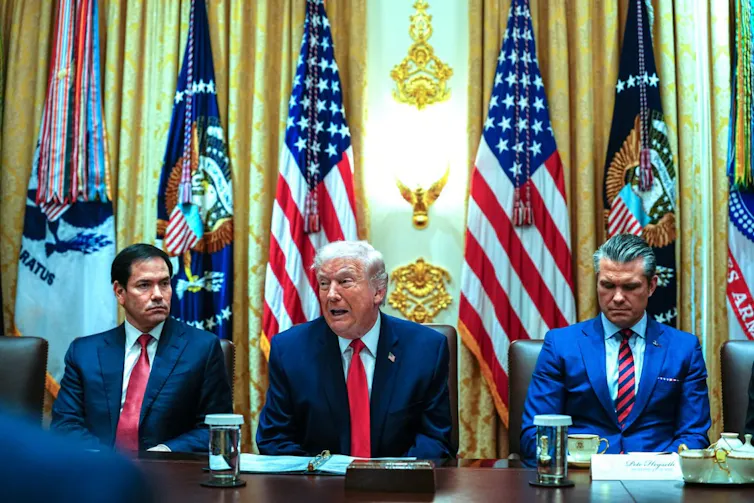
While military capability is needed to dissuade territorial invasion, the EU needs other kinds of resources and action to wield influence over other powers for non-military aims. There is a risk of the military-defence turn becoming so predominant that it draws effort away from these other forms of leverage. It may be that ultra-realpolitik is what some people want from Europe, but then it cannot convincingly pitch its geostrategy as a defence of liberal order, peace and democracy.
These conundrums can clearly be seen in European responses to events in Iran. European governments are entirely correct to defend international law against military intervention. Spain’s prime minister Pedro Sanchez has been especially impressive in setting out this position. But they have failed to map out policies that lie in the vast ground between illegal military attacks, on the one hand, and indulgent inaction towards repressive regimes on the other. Repeating fealty to international law and standing back in moral self-satisfaction does little to help citizens who are suffering under regimes like those in Iran and Venezuela. A liberal European autonomy would surely entail more proactive engagement for democratic change, even as the bloc stands back from US military actions.
The complex and spiralling crises in Iran and elsewhere require the EU to show firm resolve against Trump but also a critical self-reflection. European governments need to define whether EU autonomy is to be measured in terms of a conceptually distinctive “alternative power” or the more visceral power politics that other powers are now adopting. Without this, European independence is a ship setting sail with no destination set.




















Comments are closed.