


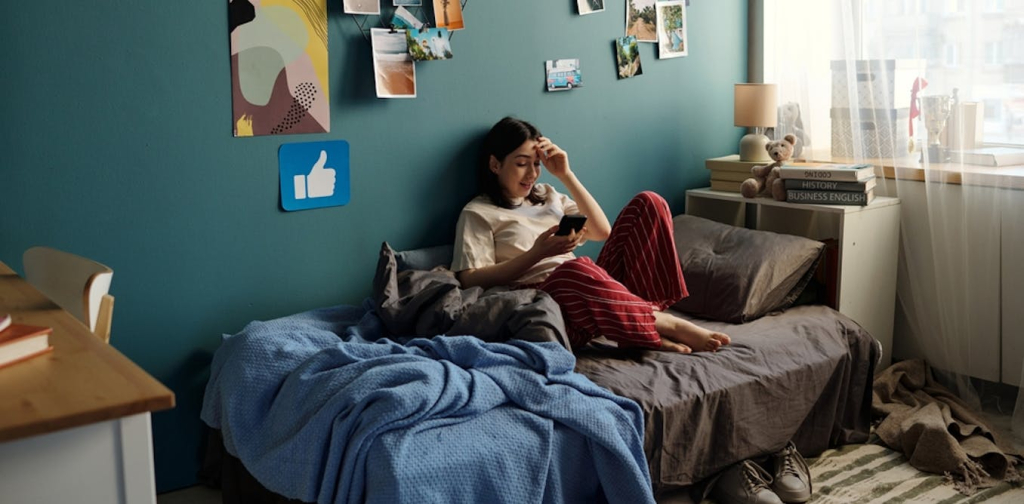

Taylor Little became so badly addicted to her smartphone that she felt she had lost many of her teenage years. “I was literally trapped by addiction at age 12 and lost my teenage years because of it,” she said. Her addiction was to social media, which led to suicide attempts and prolonged depression.
Molly Russell, at just 14, took her own life. Her parents blame the apps on her phone for exposing her to graphic and disturbing content that took control of her mindset.



These stories are not unique. Data from thousands of people shows that social media increases loneliness, depression, anxiety and suicidal thoughts. Last week, a jury in California found that Meta and YouTube were liable for causing a teenager’s addiction to social media. The idea that social media causes harm is no longer in dispute.
The proposed response – in Australia, now proposed in the UK and elsewhere – is to ban social media for under-16s. It is an understandable impulse. But there are good reasons to think it won’t work – despite politicians claiming a successful start to the ban.
Teenagers have always found ways around rules. Getting an older sibling to buy alcohol is a time-honoured tradition. When it comes to social media, teenagers are more tech-savvy than the adults trying to restrict them, and evidence is emerging that many are working around the age verification systems put in place to enforce bans, such as by using VPNs (virtual private networks).
Rules will exist, but compliance will be patchy and hard to enforce. Those most determined to access social media may also be the most resourceful in getting around restrictions. This means that the teenagers most at risk may also be the least affected by a ban. Evidence from other areas shows that when certain activities are driven underground, they often become more harmful.
Not neutral tools
Even if the bans worked perfectly, they would address only part of the problem. It is difficult to disentangle the harms of social media from the devices that deliver it.
Smartphones are not neutral tools: they are engineered to hold attention through constant notifications, “frictionless” access to content, and rewards for regular interactions. Research links smartphone use – not just social media – to disrupted sleep, impaired attention and cognition, mental health problems, physical ailments such as chronic back pain and addiction.
Social media is one component of a broader “smartphone ecosystem”, and targeting one app while leaving the ecosystem intact is unlikely to solve much.
If social media is blocked, teenagers are not going to put their phones down. They will migrate to mobile games, group chats and endless web browsing – activities that rely on the same design features driving their social media use: notifications, streaks (features that track consecutive days of use and reward consistency), infinite scroll. The problem is not any single app but a pattern of behaviour that will find new outlets.
Nor is this only a problem for teenagers. Adults struggle with excessive smartphone use too. Heavy use is associated with poorer sleep, reduced attention and higher stress – and in some respects the adult consequences are more severe. Distracted driving, often fuelled by phone use, kills thousands of people every year.

This matters for teenagers because behaviour is learned by watching others. Children who see parents, teachers and other adults checking their phones absorb that as the norm. A policy that targets only young people does nothing to change the culture they are growing up inside.
And opting out is becoming harder for everyone. Primary school children are expected to use smartphones for homework – on apps that share more than a passing resemblance to addictive games. Online banking has become more difficult without one. Workplaces assume employees are reachable via multiple WhatsApp groups at all hours.
When opting out means opting out of modern life, restricting access to one category of app starts to look less like a solution and more like a gesture.
If the goal is to reduce harm, the focus needs to widen. The deeper issue is the central role smartphones now play in everyday life – for all of us, not just teenagers. That points towards different kinds of intervention: delaying smartphone adoption among younger children, encouraging simpler devices, redesigning compulsive features across all apps, and ensuring that essential services such as banking, education and travel stop assuming everyone is glued to a screen.
Banning social media for teenagers may feel like decisive action. But until the broader dependency is addressed, it will not deliver the change its advocates are hoping for.




















Comments are closed.