


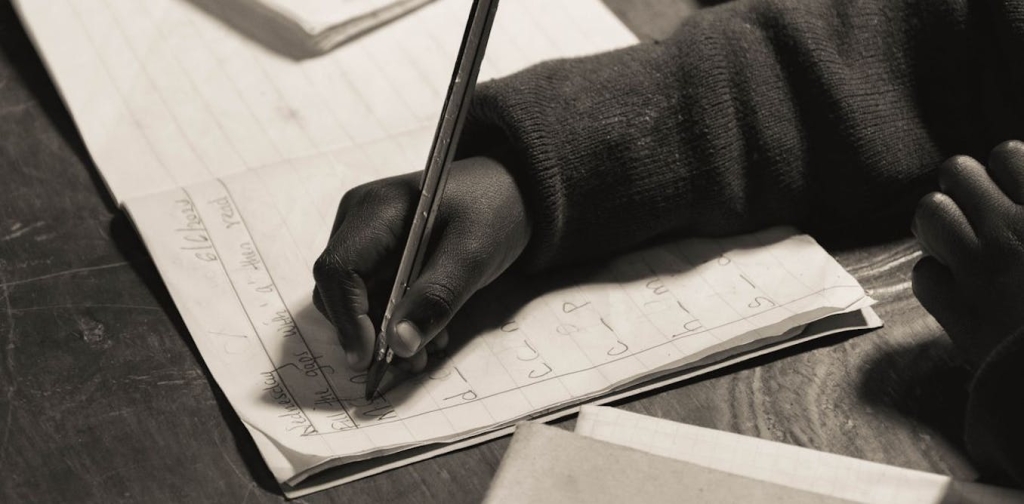

South African no-fee primary schools use African languages as well as English for teaching and testing. Before 2025, children started learning in their home language in the first three years and then switched to English in Grade 4 (aged 10 and 11). Now, bilingual education is extending gradually into the upper primary grades.
South Africa’s public basic education system serves roughly 12.7 million learners. Eighty percent of these learn through a language that is not their home language.



I am an education researcher with a special interest in language across the curriculum in multilingual contexts. In a recent case study of a bilingual science learning intervention in a Cape Town school, I wanted to know how effective it was to teach and test in more than one language, and what parents thought of the approach. Past studies hadn’t made it clear whether parents usually supported it.
The study found that teaching and testing science topics in the children’s home language and English produced much better results than using English only, and that parents were in favour of it.
The results suggest that bilingual classroom teaching and assessment could be used more widely, and it’s important to make sure parents understand why.
Better test results using two languages
The study took place in a school in Khayelitsha, a township on the outskirts of Cape Town. The no-fee school attracts learners from a wide area because it is well run. At the time of the study, the school language policy was English medium in all subjects in Grade 4, including science. The principal, however, agreed to try the bilingual approach in science for the study.
We gave 168 Grade 4 learners a bilingual science textbook in English and isiXhosa, their home language. The same teacher taught four classes bilingually, and learners used both languages in writing in their exercise books. One class was given a bilingual test while the others wrote the conventional English-only test.
The findings showed that children were more engaged in their learning in class compared with similar aged children who were learning in English only. In our study children contributed more to class discussion and wrote more in their exercise books.
In addition, those who wrote the bilingual test, with all questions written in isiXhosa and English, scored an 86% pass rate. Those who wrote the English-only test scored a 51% pass rate.
What parents said
The parents of the children in the study said during a feedback session after the test was written that they were very happy with the programme. They commented on how the bilingual textbook connected them with their child’s learning at home. Parents said their children taught them about science while at home – making links between the world around them and the concepts they were learning at school.
One parent said:
My child came back home more interested in things happening around us.
Another mentioned their own ability to get more involved in their child’s schoolwork when using their own language:
Sometimes a parent may be busy cooking, so when they ask a question you are able to answer even if you didn’t see the question.
Similarly, a parent said:
I went through the pages and read for myself without calling my child and asking what it said.
Parents also described how using more than one language was common in their neighbourhoods. Their children were multilingual and translated for one another when something was not understood. Therefore, the bilingual model of language use at school was closer to language use at home.
One parent noted that they had high hopes for their child continuing with science as a career one day because of this strong start. Parents also wanted to know if mother tongue based bilingual education would be rolled out across the country and in all grades.
None of the parents expressed a concern about their children losing out on English.
Debates on language in the classroom
This last point is important because the dominance of English in society leads to a popular belief that the earlier children learn through English only, the better equipped they will be for the world of higher education and the workplace later on. Teachers report feeling a pressure from parents to avoid code-switching from English into an African language.
Read more: In South Africa, science should be taught in only one language – how about English?
In reality, research shows that English-only education contributes to the low achievement of South African children, especially in subjects such as mathematics and science.
When parents have been surveyed on their opinions about language in education, they have usually been given an unenviable choice between monolingual English or monolingual African language instruction.
Furthermore, parents have had little to no exposure to strong models of bilingual education in English and an African language to draw on in their responses. Often the only association Black South Africans have with home language teaching is with Bantu Education, the inferior system that the apartheid state designed for Black children between 1953 and 1979.
Bilingual programmes can succeed
The bilingual science study demonstrates that when a bilingual programme is well resourced with teaching, assessment and bilingual learning materials it can produce excellent results.
Furthermore, when parents are well informed about bilingual learning, they support it. Parents can appreciate the positive impact of children’s full participation in their learning, both for school and for life outside school.





















Comments are closed.