


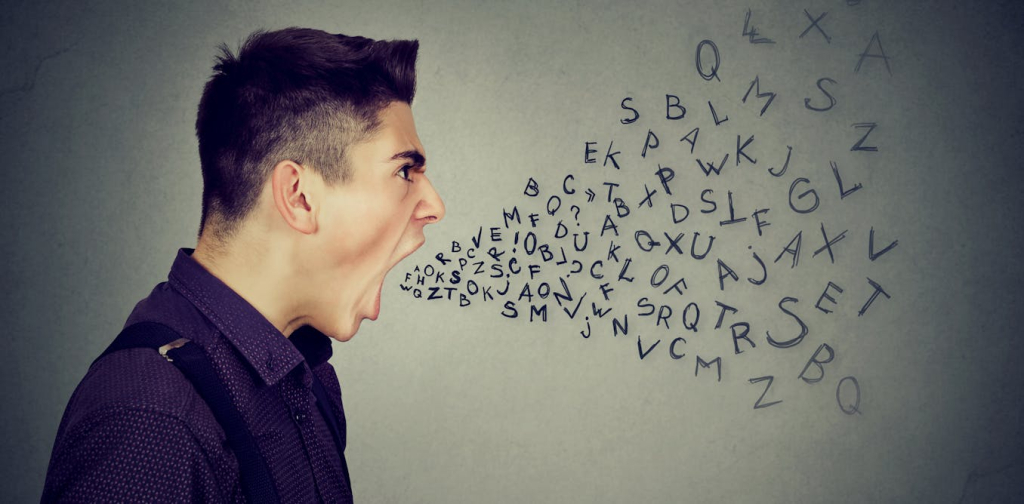




Some people love to swear. In the workplace, some of those people might be in charge.
You may have worked with one (or be one) yourself. The team leader who likes to pepper a pep talk with spicy language, or the manager who uses swear words to express themselves in the clearest possible terms.
How colleagues respond to colourful language varies. Some might enjoy it, while others are unbothered. It can also be considered a sign of poor leadership, unprofessional – and simply unnecessary.
Our research suggests people’s reactions to a sweary boss depend not only on what is being said, but also on who is listening and where they live.
We found that there is not a single “correct” way for leaders to communicate. But overall, employees were less satisfied with supervisors who frequently used profanity.
So if you’re wondering whether filling meetings with swear words is a good management strategy, it’s probably safer to avoid them.
But some people in our study of 5,660 employees in 19 countries reacted in exactly the opposite way. Those who considered themselves to have more psychopathic and machiavellian personality traits – so with lower levels of empathy – reported greater satisfaction with their leader as profanity increased.
Psychopathy and machiavellianism both involve a certain level of emotional detachment and a willingness to disregard social norms, including the norm that bosses shouldn’t swear. For these people, a boss who swears may come across as more genuine and confident, unconstrained by unnecessary rules.
Employees with stronger narcissistic traits (characterised by a sense of entitlement and a need for admiration) were surprisingly indifferent. Swearing neither impressed nor offended them very much. Their feelings of satisfaction towards their bosses barely changed.
But personality turned out to be only half of the story. The country people lived in also mattered. In societies with higher levels of income equality, such as Sweden and Austria, personality differences were more visible. This meant that the same manager using the same kind of bad language could be viewed as approachable by one employee and unprofessional by another.
In countries with lower levels of equality, however, such as South Africa and Mexico, these personality differences almost disappeared. Regardless of their individual characteristics, employees generally reacted negatively to leader profanity.
Swearing is caring
Why might this be? Research on economic inequality suggests that in more unequal societies, people become more attuned to status and rank. Workplace hierarchies carry greater weight, so a leader’s swearing is less likely to be read as friendliness or authenticity and more likely to be seen as a display of dominance. In these places, the social context appears to override individual personality differences.

The practical message for leaders is refreshingly simple. Communication is never just about the words we choose. The same sentence can inspire one employee, offend another and leave a third completely unmoved.
This also explains why leadership advice often sounds contradictory. One expert encourages leaders to “be authentic”. Another recommends maintaining professionalism at all times. In reality, both can be right, but this depends on the people involved and the cultural environment.
So, should leaders stop swearing altogether? Not necessarily. But they should recognise that effective leadership isn’t about finding one communication style that works for everyone.
It’s about understanding your audience. Knowing your team is just as important as choosing the right (or wrong) words.



















Comments are closed.