


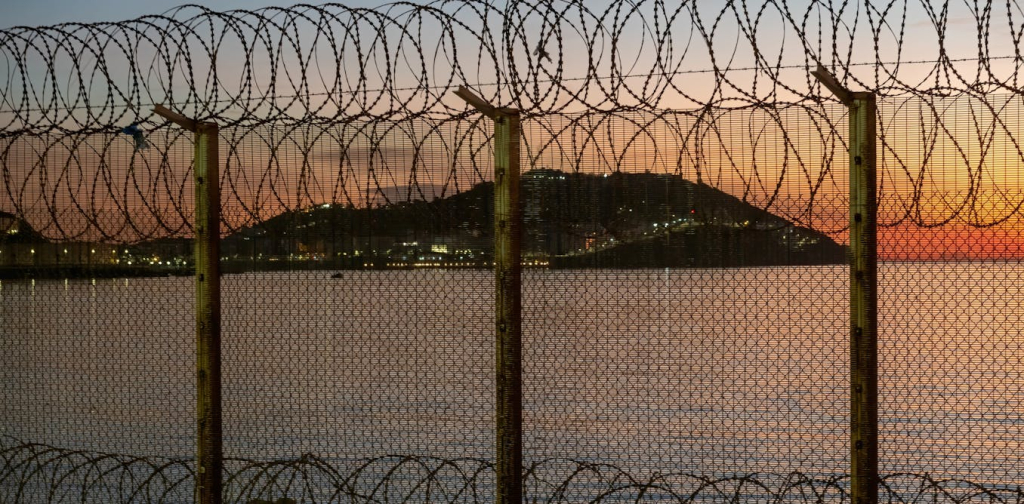

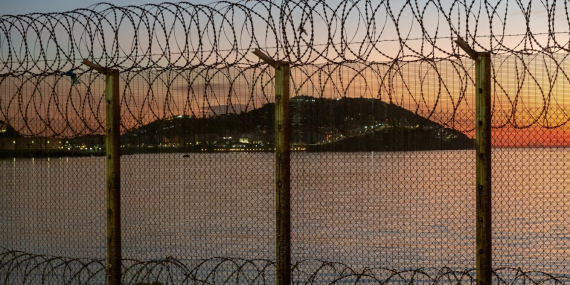
It is estimated that more than 50,000 migrants crossed entered the small Spanish enclave of Ceuta in the course of a single day after the border effectively collapsed. Ceuta, an autonomous city, sits on Morocco’s northern coast. The Spanish government has said almost all of the migrants have since returned to Morocco, and at least 57 have died.
Faced with doubts as to how and why this was able to happen, the public was left with only footage and photographs: people swimming and climbing onto Ceuta’s Tarajal beach, tens of thousands in a single day and night, scores dead.


With no facts or explanations to back them up, scenes like these land in the imagination first. And the imagination is where a country’s attitude to migration is built.
The Ceuta border crossing undermines one of Spain’s more flattering ideas about itself. After the long years of fascist dictatorship the country has spent recent years recasting itself as a place that embraces migration and diversity while much of Europe talks about walls and defence.
This is a story Spain tells with real conviction – a nation at the crossroads of Europe and Africa, shaped by centuries of cultural mixing. And it often puts these ideals into action – only six months ago, it opened a route to legal residence for hundreds of thousands of immigrants already living and working in the country.
But national self-image and public opinion are a cultural achievement more than a legal one. They run on emotions, which makes them far more delicate – and far more vulnerable to misinformation and exploitation – than any law.
Images, words, opinions
We can watch opinions change in real time by seeing what happens to the words people use. A day earlier, the public language of migration was ordinary and neutral. It mostly concerned integration, work permits, the ordinary paperwork of settled lives.
The images emerging from Ceuta have shoved that aside, instilling a harder register. Words like “invasion”, “war”, “flood” and “control” now predominate across public statements and social media.
For ordinary people, this means the migrant who could be a neighbour, a colleague or a classmate’s parent becomes a faceless figure, a number crossing a beach. A number is far harder to grieve than a person, and language that deals in numbers can be as cold as it likes without sounding cruel.
Meanwhile, an image – like those now looping on TV screens and social media – argues without making an argument. Rhetoric has to persuade, to say something a listener can answer, but images offer a shortcut to the feeling beneath it. They move the starting point of any conversation on the subject.
The images circulating from Ceuta mean that the Spanish government is forced into a position of explaining itself, while punitive ideas are waved through as common sense. Sentences that would have sounded ugly on Wednesday sounded almost like sober description by Friday. The moderate ends up looking naive, and the burden of proof changes hands without anyone announcing it.
The optics are a gift for Europe’s far right, and they know precisely what to do with it. They can lose every argument about the real numbers and still come out ahead, because their aim is to make the story of a welcoming Spain look foolish. In the absence of any other information, videos and images do a lot of that work for free.
Normalising extreme language
The leader of Spain’s right-wing opposition party, the Partido Popular (PP), has already linked the border crossing to the Spanish government’s policy of mass regularisation, introduced in February – making the unfounded claim that it created a “pull factor”.
The leader of Spain’s far-right Vox party went further, immediately branding the arrivals an “invasion” of military-age men. US businessman Elon Musk has made the same argument, and compared the images to a scene from the 2013 zombie film World War Z.
But for the far right, this reaches past a single news cycle. The moment their vocabulary stops sounding extreme, the mainstream right has to answer in the same terms or risk looking weak. Once the conversation shifts, anyone defending Spain’s self-image as an open, welcoming country is already on the back foot, apologising before they have said a word.
In the aftermath of the Ceuta incident, this is what Spain stands to lose: the ability to tell its story of welcoming immigration and embracing diversity without having to first apologise for it.

A weekly e-mail in English featuring expertise from scholars and researchers. It provides an introduction to the diversity of research coming out of the continent and considers some of the key issues facing European countries. Get the newsletter!
















Comments are closed.