



One Nation’s surge can no longer be seen as a blip or an aberration. As the results in the Farrer byelection showed, the right-wing populist party – which has been hovering on the fringes of Australian politics for 30 years – is now a serious electoral force.
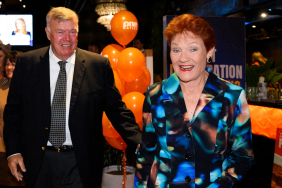
While the byelection was considered likely to be a close contest between One Nation’s David Farley and independent Michelle Milthorpe, in the end voters delivered an easy win to Farley. His is the first One Nation victory in a federal House of Representatives seat.


Results on Sunday morning showed Farley attained 57.3% of the two-candidate preferred vote against Milthorpe’s 42.7%. Primary votes for One Nation surged from 6.6% in the 2025 election, to 39.4% as of Sunday morning. Milthorpe’s primary increased 20% to 28.4%, likely benefitting from Labor’s decision not to contest the byelection.
The increased support for One Nation was largely drawn from the previous Liberal vote. One Nation was also helped considerably by the Liberals opting to preference Farley over Milthorpe. Farley received approximately 60% of Coalition preferences. The Liberal total declined from the 43.4% primary achieved by Sussan Ley in 2025, to an anaemic 12.4% for new Liberal candidate Raissa Butkowski.
This outcome represents a dramatic collapse in Coalition support. But it also shows a huge surge in support for One Nation, which is now eyeing November’s Victorian state election and the next federal poll in 2028.
Dissatisfaction in the regions
Farrer is now the third strong result for One Nation in 2026, following the South Australian state election and the Nepean state byelection in Victoria. Each of these contests has seen high polling results for One Nation translate into real election results.
Farrer is centred around the inland City of Albury and surrounding agricultural areas in south-west New South Wales. Local issues that came to the fore throughout the campaign were funding for the Albury hospital, and the Albanese government’s increase of water buybacks, which have driven up costs for irrigators.
While these are not issues that resonate in metropolitan Australia, they are certainly felt in other regional and rural electorates. Combined with One Nation’s focus on cost of living and immigration, the party effectively harnessed voter dissatisfaction with long-term Coalition representation.
Coalition in deep water
Traditionally, byelections have been considered an opportunity for voters to deliver a “free kick” against sitting governments, without the prospect of changing the government. By this reading, the Farrer result could be understood as an opportunity for voters to express dissatisfaction with the establishment political parties, exacerbated by a cost of living crisis.
However, this result could also be read as more akin to the Aston 2023 and Wentworth 2018 byelections. In Aston, the Liberals lost a seat in Melbourne’s leafy eastern suburbs they had held since 1990. It also represented the first seat lost to an incumbent government in a byelection since 1921. Labor went on to hold the seat in the 2025 federal election, also gaining the seats of Deakin and Menzies in eastern Melbourne.
In Wentworth, Kerryn Phelps defeated the Liberals in a byelection caused by the resignation of Malcolm Turnbull. Wentworth went on to become the prototype for other independents – particularly the “Teals” – across northern Sydney. These socially progressive and fiscally moderate-conservative independents have since been successful in traditional moderate Liberal bastions such as Warringah, Mackellar and Bradfield.
The loss of Wentworth heralded a wave of losses for moderate Liberals in the inner city. This has left the Coalition mainly composed of rural and regional members. The Coalition’s existential task is to prevent the Farrer result from being replicated in similar seats and decimating its remaining conservative rural and regional base.

One Nation’s trajectory
This is a landmark result for One Nation. However, the party has had difficulty maintaining the loyalty of its elected members, both in the 1990s, and since 2016. For example, after its breakthrough in the Queensland 1998 state election, none of the 11 members the party elected remained in the organisation throughout the parliamentary term.
Throughout the Farrer campaign there were questions around Farley’s party loyalties. With a background in agribusiness, Farley had been affiliated with the Nationals. More contentious, however, was his involvement with the Labor party as recently as 2023, his consideration of an independent candidacy, and his endorsement of Milthorpe in 2025.
Farley also contradicted One Nation’s immigration policy on the campaign trail, stating net annual migration of approximately 306,000 per year was “probably not” too high. This is far beyond One Nation’s position of capping net migration at 130,000.
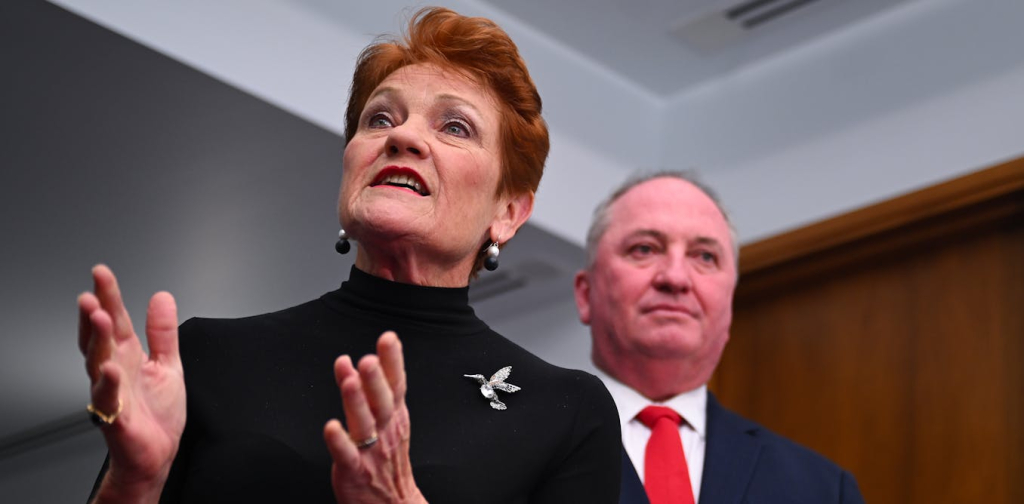
The Farrer result helps to solidify One Nation as a political force in rural and regional Australia. It may encourage Pauline Hanson and Barnaby Joyce to contest lower house electorates rather than the Senate in the 2028 federal election. This could see One Nation become a party with explicit coalition bargaining power.
This exacerbates the Coalition’s dilemma in handling One Nation, with it seeming to open the door to potential future cooperation in government.
However, Labor also faces a challenge – with Joyce signalling its Western Sydney heartland as an electoral target and the beleaguered Allan government in Victoria facing an election in November.














Comments are closed.