



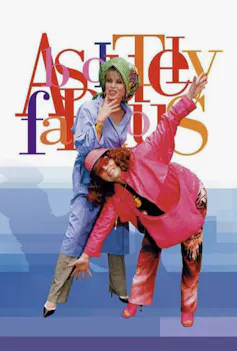
Constantly namedropped in Absolutely Fabulous – one of the sharpest and funniest sitcoms of the 1990s – London’s most iconic fashion department store is up for sale following a significant downturn in business over the last five years.
Sadly, the retail pressures of a declining luxury goods market and the removal of VAT-free tourist shopping post-Brexit appear to have done for the once-indomitable Harvey Nichols.


Founded in 1831 by Benjamin Harvey, it was originally a linen shop positioned on the corner of Knightsbridge and Sloane Street in the heart of London. Following some initial expansion, Harvey employed a skilled shop assistant called John Nichols in 1841.
After Harvey’s death in 1858, his widow Anne Beale entered a business partnership with Nichols, creating Harvey Nichols & Co, which eventually would become one of the most recognised and desirable fashion stores in the world.
For decades Harvey Nichols has been at the forefront of luxury retail, but in March 2024 the group, which includes regional stores in Manchester, Leeds, Birmingham, Bristol, Edinburgh and Dublin, reported a loss of £34 million.
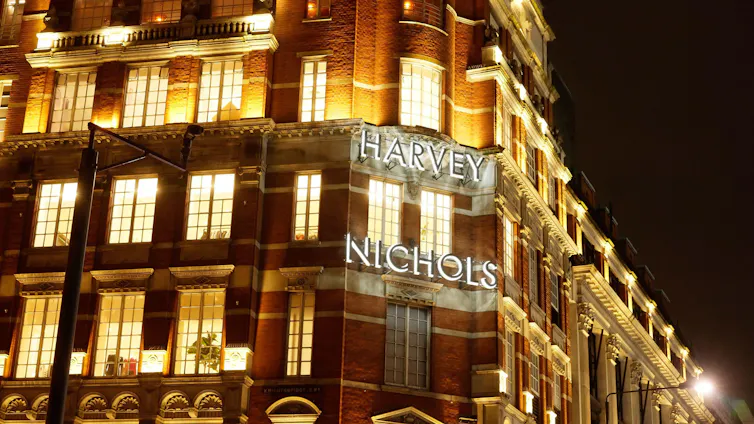
Despite significant investment in refurbishment of the London store, rumours of an imminent sale by owner and Hong Kong billionaire, Dickson Poon were making headlines by the end of June 2026.
Initial interest in the store was expressed by UK high-street fashion retailer Next. More recently, the Harvey Nichols group has been obliged to allow Mike Ashley’s Fraser Group to enter the auction. The competition has been further heightened by the announcement that Modella Capital will join the bidders.
While Harvey Nichols’ future remains uncertain, this seems an important moment to reflect on why this department store has been so significant to British fashion and popular culture.
The Ab Fab Effect
While the store has had a long history, it was during the 1990s – after the Burton Group sold it to Poon in 1991 – that Harvey Nichols reached new heights. During this time I was lucky enough to work in the Knightsbridge store and experience the rise of Harvey Nichols from fashion store to cultural icon.
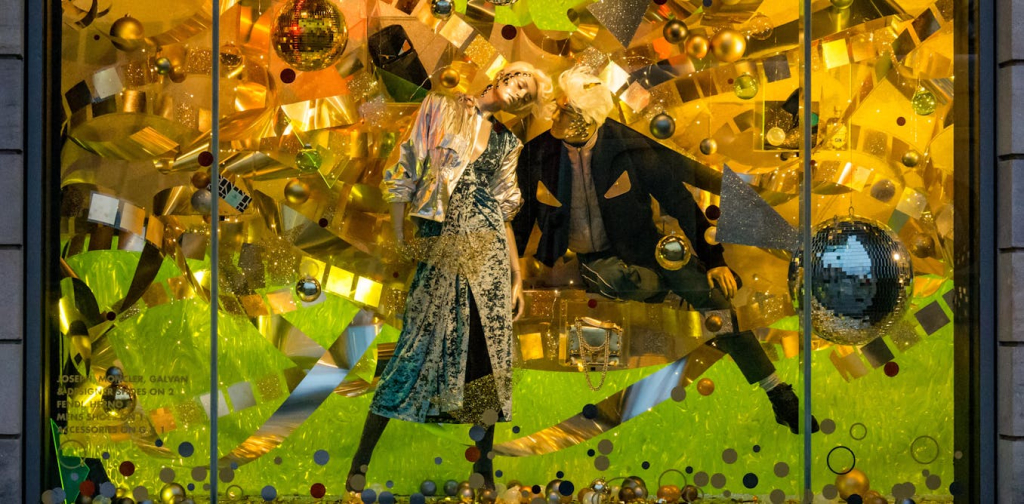
This was an era when broadcaster and retail expert Mary Portas, worked as a window dresser for the store, transforming Harvey Nichols’ windows into attention-grabbing “destinations”. Portas also sat on the board until she left to launch her own consultancy in 1997.
In 1992 the hedonistic protagonists of new BBC sitcom Absolutely Fabulous, fashion PRs Edina Monsoon and Patsy Stone were avid Harvey Nichols fans, taking the store to a whole new level of fame.
Actresses Joanna Lumley and Jennifer Saunders, along with the British fashion designer Betty Jackson, were often seen walking around the store, looking for the show’s next iconic looks. Scenes were occasionally filmed there after hours and it was Patsy and Edina who created the phrase “Harvey Nicks” and brought it into the language of popular culture.
This was the Ab Fab effect which helped drive Harvey Nichols’ place in fashion and culture by making it a household name.
Behind the scenes
While the impending sale of Harvey Nichols fills me with great sadness, it also prompts fond reflection on many of the extraordinary experiences I had while working there in my youth.
My first job in the grand Victorian redbrick Knightsbridge building was on the newly created fourth-floor department, dedicated to home and interiors. I worked in the Ralph Lauren home section where I was responsible for bathroom towels, ensuring they were folded perfectly.
Not long after I moved down to the second floor to what would be a dream job in the shoe department, of which I eventually became manager. Selling luxury shoes required a very personal service that Harvey Nichols was renowned for. This included kneeling before your customers and taking shoes on and off their feet. The experience was to inform my later research into the role of materials in shoe design.
It was a time before online shopping and the subsequent reshaping of consumer behaviour. The physical retail experience was something sensory and tactile, from the feel of luxurious fabrics to the smell of uplifting fragrances we would spray in fitting rooms.
It was an era when formal dress was required for sale assistants: no bare legs, and certainly not a trainer in sight. Dress shoes with heels were expected and standing for up to eight hours a day could be quite painful.
Harvey Nichols was very popular with the rich and famous. I remember staying late into the night for private shopping evenings for celebrities, mainly from Hollywood. I also recall having to call security on many occasions to have press photographers who were pursuing Princess Diana removed from the store.
A defining era in fashion
The 1990s was an exciting time in fashion. It was the age of the supermodel and the rise of the designer “diffusion” label (a more accessible, less expensive collection), such as Versus by Versace. This created new opportunities for fashion retail.
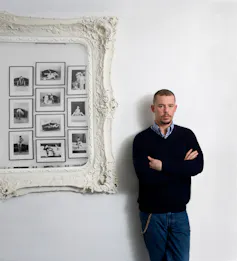
From cool quirky beauty brands, such as the cultish Hard Candy with its nail polish designed for men, to hotly tipped new designers such as Alexander McQueen, Harvey Nichols was always at the leading edge.
It was a time of evolution and change in luxury fashion, and for Harvey Nichols this included the development of their fifth-floor food market in 1992, a hugely popular destination for cocktails and people-watching. The group also opened a top-floor bar and restaurant in the iconic Oxo Tower building on London’s Southbank in 1996.
That year Harvey Nichols also opened its first regional store in Leeds, followed by Birmingham in 2001. It was a decade of expansion and growth which secured Harvey Nichols’ place as a leader in luxury fashion retail and experience.
While news of the store’s future is anxiously anticipated, its remarkable place in fashion’s history will remain unaffected. Personally, I will always be very proud to say that I worked at Harvey Nicks.


















Comments are closed.