




African governments are increasingly encouraging young people to work abroad. To address youth unemployment at home, for example, Ghana and Kenya have expanded labour mobility agreements with other countries. These include Spain, Qatar and Caribbean states.
Agreements with Gulf countries have largely focused on construction and service-sector jobs. But newer partnerships with Caribbean countries are targeting skilled professionals like nurses and healthcare workers.



These arrangements can create structured pathways for people to work abroad, often in sectors where labour is in high demand.
Many African countries have large and growing youth populations struggling to get decent jobs. Meanwhile, wealthier economies face ageing populations and labour shortages. Evidence suggests that 71.7% of young adult (25-29) workers in sub-Saharan Africa are engaged in “insecure” work. At the same time, countries across Europe and elsewhere need labour in sectors such as care, agriculture and construction. Matching workers to labour shortages abroad appears to offer a practical solution.
But a deeper question emerges. What are the long-term development implications of governments promoting overseas employment as an economic strategy?
We study migration governance and youth aspirations in Ghana. We have examined how governments, international actors and young people understand the role of migration in development. Drawing on documentary analysis, interviews with policymakers and migration stakeholders, and ethnographic research with young people in Ghana, our recent research found that policymakers increasingly adopt an “economic gains” lens. They view migration as a source of remittances, skills and investment. On the other hand, young people’s aspirations to migrate remain rooted in limited opportunities and broader socioeconomic realities.
Our study focused on migration governance rather than labour mobility agreements themselves. However, it raises the question of what happens when seeing migration as an economic resource begins to shape labour mobility policy.
The drivers
In Ghana, remittances account for 6% of the country’s GDP. In 2024, this was about US$4.6 billion. It was far more than foreign direct investment and official development assistance combined that year. Expanding overseas employment is therefore seen as increasing these inflows while easing pressure on domestic labour markets.
One example of the implications concerns the protection of migrant workers.
Recent research from Kenya has shown how governments may encourage overseas employment even when protections for migrant workers remain uneven. This is an important concern, but misses a larger issue.
Broader development trade-offs can receive less attention. Even where labour mobility agreements are relatively well regulated, they may still contribute to structural challenges at home, such as the loss of skilled workers in critical sectors like health and education.
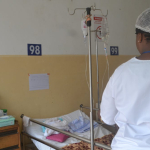
Ghana provides a clear example. The country is already experiencing a significant outflow of health professionals. Records show 500 nurses have left every month in recent years to work abroad. At the same time, health systems at home remain under pressure, with high patient-to-healthcare personnel ratios and limited resources.
This has prompted wider debates about ethical recruitment from countries already facing healthcare workforce shortages. Promoting further migration, even under formal agreements, raises important questions. Can countries sustain essential services while easing the departure of skilled workers? And how do these policies affect long-term investments in human capital?
What happens when migrants return?
Our research also highlights the importance of thinking about migration as a broader development process rather than simply movement across borders. As labour mobility expands, the question of what happens when migrants return is becoming increasingly important. Many migrants eventually return home, bringing skills, experience and financial resources.
Return migration can support entrepreneurship, innovation and local development. But these outcomes are not automatic. The UN World Youth Report on Youth and Migration suggests that returnees often require effective reintegration support and access to economic opportunities to translate the skills and experience acquired abroad into local development gains. Policies such as skills recognition and access to finance can help make this possible.
Rethinking labour mobility
One implication of our research is that migration policies should be embedded within broader development strategies rather than judged only by their immediate economic returns. This does not mean labour mobility should be discouraged. Rather, it should complement (not replace) investments in decent work, skills development and strong public institutions at home. Labour mobility is therefore not inherently negative. When well designed, it can contribute to both individual and national development.
For this to happen, it needs to move beyond a narrow focus on job placement abroad.
First, strategic partnerships between governments, employers, education and training institutions, recruitment agencies and international organisations are essential. This could involve jointly designed training programmes, mutual recognition of qualifications, and agreements where destination countries invest in training skilled workers in origin countries.
Second, reintegration needs to be taken more seriously. Providing access to finance, training and employment opportunities for returnees can help translate migration experiences into local economic development gains.
Third, labour mobility should not replace domestic job creation but complement it. Governments need to continue investing in sectors that can offer young people decent work at home, rather than relying on migration as the primary solution to youth unemployment or underemployment.
The key question is how migration fits into a broader development strategy.
Labour mobility can create opportunities for individuals and families. But it cannot substitute for long-term investments in decent work, education and economic transformation at home.
If treated simply as a short-term solution to unemployment, labour mobility risks deepening inequalities and weakening already fragile systems. When embedded in a broader development strategy, it can contribute to more inclusive and sustainable growth.



















Comments are closed.