


Following a sudden? influx of migrants into the Spanish enclave of Ceuta, the discussion on unauthorised migration to Europe is again heightened. In the UK this means a focus on small boat crossings and the policy surrounding them, particularly following 752 arrivals on July 29 – the highest number for one day so far this year, with four deaths recorded. The UK prime minster, Andy Burnham, has announced he will be “relentless” in addressing the issue, but is this the right approach? Our experts explain the statistics and language around small boat crossings into the UK, as well as what needs to change for immigration policies to succeed.
Why small boat arrivals have declined
Mihnea Cuibus, Senior Researcher, The Migration Observatory at The University of Oxford



Small boat arrivals have declined in 2026. Around 14,000 people crossed the Channel between January and July, 43% fewer than in 2025. Approximately 30,000 people arrived by small boat in the year ending July 31 2026, one-third below the levels seen last autumn, and slightly less than when Labour took office.
The government has made several policy changes since 2024, including scrapping the previous government’s Illegal Migration Act and Rwanda scheme. It then shifted to a model of temporary protection for refugees, restricted refugee family reunion. It has scaled up existing enforcement efforts and reached a deal to return some people who arrive by small boat to France.
Some government policies may have contributed to the decline. Restrictive family reunion policies are generally associated with fewer asylum claims, and physically preventing boat departures appear to have reduced crossings elsewhere. The deal with France may deter migrants if a high share of arrivals were to be swiftly returned, though this number remains relatively low, with 4% returned between September 2025 and June 2026. Smugglers have also changed how and where they operate in response to more enforcement in France, with more departures from Belgium this year.
However, external factors may have also played a role. Unauthorised arrivals into the EU have fallen since 2025, which may ultimately lead to fewer crossings to the UK. And changes to conflict situations in origin countries, such as Syria, can also affect migrant numbers.
Britain’s relationship with the EU
Simon Usherwood, Professor of Politics & International Studies, The Open University
In his comments about the influx of migrants in Ceuta at the end of July, Andy Burnham spoke of the need for “regular dialogue with the EU”. This was interesting for several reasons.
Despite Ceuta’s distance from the UK and its very particular relationship to the rest of the Schengen area of free movement, Burnham recognised that this has taken on a Europe-wide dimension. In a letter following the border crossing incident, 22 European leaders sharply criticised the Spanish government, and prompted broader discussion about “illegal border movements”. This will bring Channel crossings back up the European agenda, which might offer opportunities for Burnham to gather more support for action from the EU.

Simultaneously, Burnham’s stance is a reflection of the very limited role that the EU currently plays in managing small boat crossings in the Channel. Competence for border controls and policing of people smuggling remains very much a matter for national governments, as seen in the recent ramping up of UK-French cooperation.
Since the UK left the EU, it no longer has access to the Dublin regulation arrangements that allowed it to return asylum seekers to other EU member states without considering their claims. Talking with the EU might sound good, but in practice it will be work with those countries on the edge of the Channel that delivers most results.
Finally, this is one of Burnham’s very first mentions of work with the EU since starting his path to Number 10. Yet, it’s an issue that isn’t an obvious priority for either side, and since the UK has little to offer the EU, we are likely to see limited progress. How this feeds into the more pressing elements of UK-EU relations – negotiations on food standards, youth mobility and the rest – will only become clear in the coming months.
Behind Burnham’s language
Erica Consterdine, Senior Lecturer in Public Policy, Lancaster University
Small boat crossings have come to dominate the immigration debate, despite accounting for only a small share of overall migration. Now, they serve as a visible symbol of a government’s perceived control over the border.
Many believe these crossings are a new phenomenon and evidence of a system in crisis. In reality, irregular movement across the Channel has existed for decades. What’s changed is that tighter border controls have made other clandestine forms of irregular entry harder. Successive governments have also restricted safe and legal routes for people to seek asylum in the UK, pushing more desperate people towards dangerous sea crossings.
Conservative prime ministers politicised small boats – Boris Johnson described Channel crossings as “criminal”, while Rishi Sunak elevated “stop the boats” into a defining slogan of his government. Labour’s rhetoric under Keir Starmer differed in tone but less so in substance. Rather than stopping the boats, Starmer promised to “smash the gangs”. The target changed, but the underlying emphasis on toughness remained.
That is why Andy Burnham’s comments are notable. In his 2015 leadership bid, he followed a protectionist line, setting out plans to ban EU citizens from claiming welfare benefits until they have worked for two years, while echoing a longstanding political narrative that frames anti-immigration sentiment as a “legitimate concern”.
His re-appointment of Shabana Mahmood as home secretary follows the Blue Labour tradition that has increasingly shaped Labour’s thinking on borders, belonging and immigration.
Burnham’s rhetoric of being “relentless” in reducing crossings follows the Labour playbook. But his recognition of needing to “build a system that offers safe routes for people as well” hints at an overdue shift that is grounded in reality, rather than the fantasy of borders being simply willed shut.

The ‘taking back control’ narrative
Alex Balch, Professor of Politics, University of Liverpool
The framing of policy towards small boat crossings as “taking back control” might be seductive to politicians, but it illustrates how little the debate reflects the complexities around managing migration.
The government should be urgently responding to how many people are dying trying to cross the channel through dangerous means, and working hard to provide alternative routes and processes for people to seek protection or entry to the UK.
Governments can never fully dictate who wants to visit or live in a country. Complete and total control over national borders is not possible – or even desirable – if we want to continue to live in an open and free society. It would mean spending much more, and allowing the government to deploy high levels of somewhat indiscriminate violence, including on its own population, as seen in the US recently.
The best alternative to the ineffective (and costly) focus on trying to deter people from crossing is to commit to a more pragmatic and realistic approach to how irregular migration is better managed across Europe. This requires partnership with the non-European countries and regions that people are migrating from. Burnham’s promise to be “relentless” and “bring back that control” sounds familiar and risks the continued disregard for the needs and welfare of people moving across borders.
But the current situation does not work or adequately serve the interests of the country. Enforcement at the border and increasingly inside the country pushes people into ever more dangerous journeys and criminalises those seeking to contribute to Britain and make a better life for themselves and their families.
A different approach may not mean abandoning border controls, but having a more honest discussion about immigration. This includes the rights and dignity of those migrating, the costs of the current policies to the country, practice around detaining and deporting people, and recognising how the existing approach causes many of the harms we are witnessing.
Breaking the cycle: secure housing and the right to work
Jonathan Darling, Professor of Geography, University of Durham
Andy Burnham’s stated desire to avoid “playing politics” with asylum is a laudable one. Since 2019, successive governments have talked tough on asylum while doing little to improve the asylum system. Instead of tackling backlogs in decision-making and supporting integration, public resources have been wasted on attention-grabbing policies that punish asylum seekers.
Breaking this cycle is crucial if Britain is to have an asylum system that treats people with dignity. Burnham has reportedly considered ending the outsourcing of asylum accommodation, a system that is lucrative for private firms and costly to the taxpayer. This failed model of housing damages the lives of asylum seekers, placing them in unsafe and poor-quality accommodation, and creates community tensions through lack of engagement with residents.
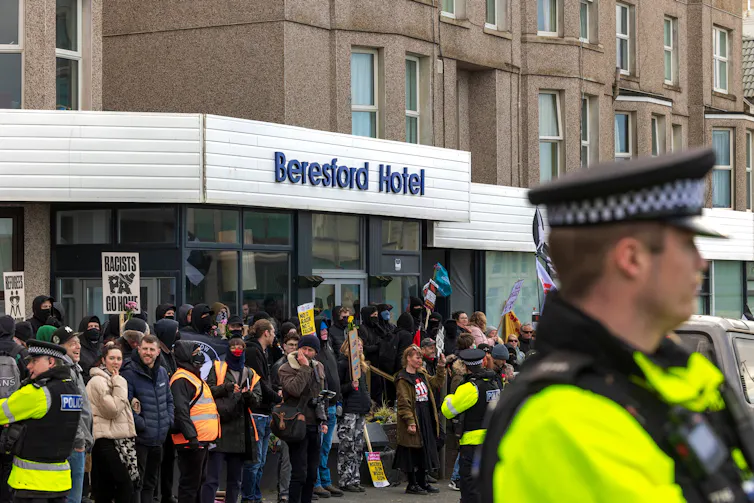
Making local authorities responsible for asylum accommodation will not easily solve these issues. But empowering local authorities would mean that the asylum system benefits from the knowledge and expertise of local government on housing conditions, housing markets and social cohesion.
Where managed effectively and publicly, asylum housing can offer pathways to regeneration, the establishment of new communities and the growth of local economies. Working with devolved authorities to invest in accommodation would also align with the aims of Burnham’s wider devolution agenda.
A second positive step would be to give asylum seekers the right to work after six months in the asylum system. This would reduce costs of support on the state and would enable the economy to benefit from the skills and experience of new arrivals. The right to work would also have further benefits: tackling social isolation, improving mental health and facilitating integration.






















Comments are closed.