


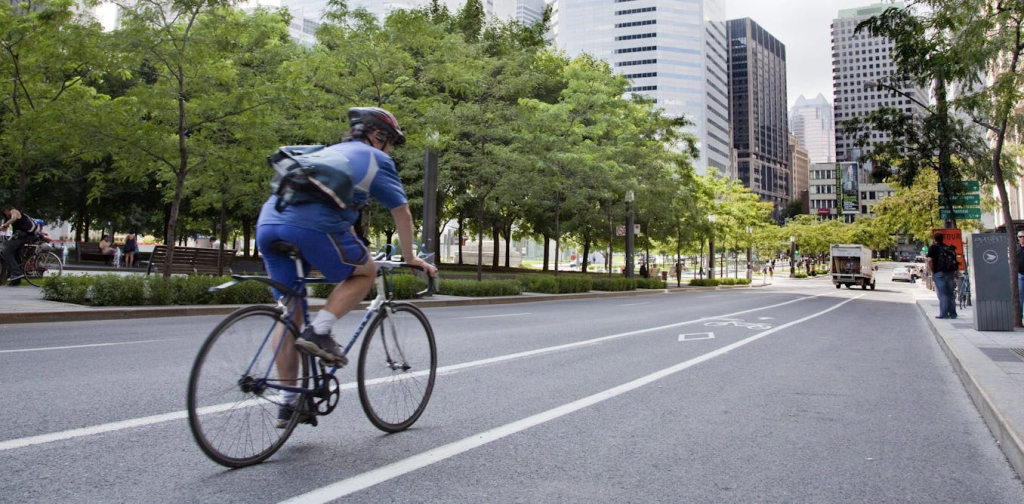

Cities in Canada are creating bike infrastructure to support active and sustainable transportation. But as bike networks expand, some neighbourhoods tend to benefit more than others, and that raises an important question: Who is benefiting from these investments?
In our recent research, we investigated this question by analyzing the evolution of cycling infrastructure in Montréal, Vancouver and Victoria between 2011 and 2021.



We found that neighbourhoods with more children, older adults and racialized people were often farther from new cycling infrastructure, even as bike networks expanded. Cycling infrastructure includes cycle tracks, bike-only paths, local street bikeways, multi-use paths and painted bike lanes.
A recent survey by the Canadian Automobile Association showed that almost one in three Canadians would consider biking more if they had access to better infrastructure. The survey found that inadequate cycling infrastructure was the most commonly cited reason for not cycling more, even ahead of bad weather.
Active transportation like walking and cycling connect us to nearby communities and amenities. It can promote socially connected communities, reduce the risk of depression and stress and provide opportunities for physical activity.
Despite these benefits, only between one to six per cent of Canadians use active transportation as their main mode of commuting. Many factors can effect whether people take up cycling, including the cost of a bike and education for safe cycling.
Our findings
Montréal, Vancouver and Victoria are three Canadian cities that differ in size, demographics and their approaches to building cycling networks.
Our study into how cycling infrastructure had evolved in those three communities did not include shared lanes with painted markings but no physical separation between bicycles and vehicles (“sharrows”) because of their known safety risks. Our study also left out other cycling-related facilities, such as bicycle parking or lockers.
Despite expansions in cycling infrastructure over the decade, some equity gaps persisted. Across all three cities, areas with more children and, to a lesser extent, older adults, were usually further away from bike infrastructure.
In addition, in Montréal and Vancouver, neighbourhoods with higher proportions of racialized people also had poorer access, although we didn’t observe this pattern in Victoria.
Previous research suggests that racialized communities often receive fewer cycling infrastructure investments. Whether these factors explain the disparities observed in Montréal and Vancouver remains unclear.

More research is needed to investigate the causes of these inequities (and the absence of a similar pattern in Victoria), including the roles of historical infrastructure investment, municipal planning priorities, residential segregation and other structural factors.
Interestingly, Montréal stood out as steadily narrowing the gap in access for neighbourhoods with more children over the decade. This improvement coincided with a more decentralized expansion of bike infrastructure beyond the city’s downtown core, including the implementation of the Réseau Express Vélo (Express Bike Network), a protected network of bike routes connecting different boroughs across the island of Montréal. Vancouver also had a somewhat decentralized implementation of cycling infrastructure; however, expansion was more limited than in Montréal.
Montréal increased cycling infrastructure by 63 per cent between 2010 and 2021 (from 891 kilometres to 1,449 kilometres), whereas Vancouver experienced a 24 per cent increase (from 220 kilometres to 273 kilometres).
This more limited expansion may have contributed to less consistent improvements in access across neighbourhoods with higher proportions of children. Although Victoria experienced substantial infrastructure expansion (from 24 km to 46 km, a 92 per cent increase), its implementation was more concentrated in the downtown area, where relatively few children live, potentially limiting improvements in access for neighbourhoods with more children.
Our findings also raise an important question: Why do these gaps exist? Are new bike routes being built less often in neighbourhoods with more children, older adults and racialized people? Or are these groups more likely to live in areas that have historically received fewer cycling investments?
Read more: Montréal’s bike infrastructure hardly takes up any space from cars on city roads
Improving access

Children and seniors are physically more vulnerable than young and middle-aged adults. Individual precautionary measures like helmets and safe riding education are important, but they may be insufficient without physical bike infrastructure that provides protection from motor vehicles.
We also know less about what encourages children and older adults to cycle, and what prevents them from doing so. Currently, many surveys focus on the cycling uptake of commuters, which mostly include adults of working age. Past studies also suggest that racialized people are underrepresented among those who cycle.
Our finding that neighbourhoods with larger proportion of racialized people live further away from bike infrastructure may help explain this disparity. It also supports previous research showing that racialized communities are underrepresented in access to safe bike routes.
Cities need to facilitate better access to cycling infrastructure for all residents. This may mean prioritizing neighbourhoods further away from existing infrastructure or those that are home to demographic groups with a lower cycling uptake.




















Comments are closed.