


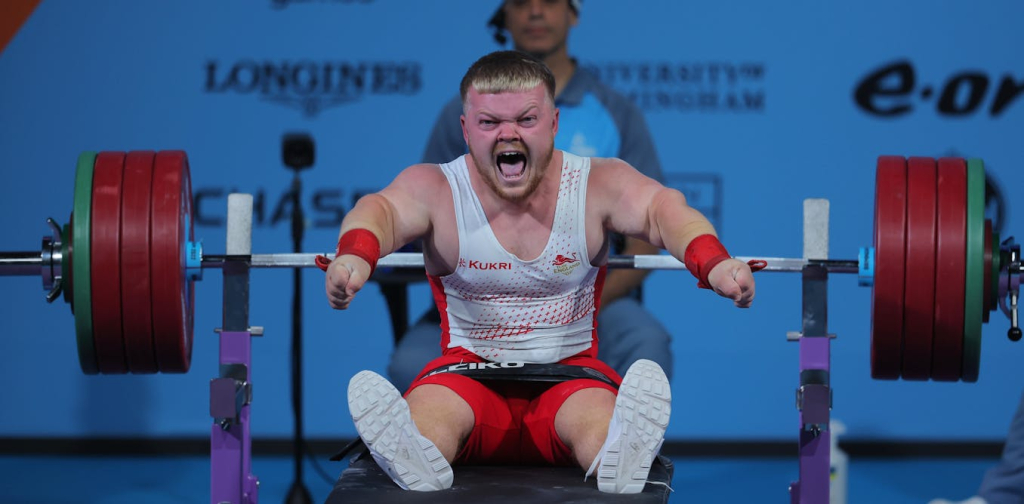

The Commonwealth Games, being staged this year in Glasgow, hold para events in the same place and at the same time as the general competition. Not only does this give equal opportunity to all athletes, but it also brings disability sport into the mainstream conversation.
The multi-sport competition has been held every four years since 1930, when they were known as the British Empire Games. At the 1994 games in Victoria, Canada, disabled athletes were included in exhibition events. But in 2002 in Manchester, England, para athletes were fully integrated into their teams.


This made the Commonwealth Games the first major event where para competition took place alongside the general programme, with disabled athletes’ medals counting towards their nation’s tally.
Read more: Too many disabled young people are missing out on PE – here’s how that could change
And over recent years, opportunities for elite para sportsmen and women have grown and coverage has expanded. A partnership between the International Olympic Committee and International Paralympic Committee, the increased media coverage of the Paralympics, and integration within the Commonwealth Games have all been important steps for disability sport.
Now, Glasgow 2026 will see records broken for the largest integrated event in Commonwealth Games history, with 47 medal events over six sports. More than 450 para athletes will compete. And the very first medal of these games will be awarded in para powerlifting.
Despite this progress, the effects don’t seem to be felt the same at all levels of sport. Disabled people are still significantly less likely to participate in sport and physical activity compared to non-disabled people.
In Scotland, for example, almost one in five disabled people do no physical activity at all. And globally, disabled people have been found to be twice as likely to be physically inactive as non-disabled people.
Physical inactivity and lack of access to sport are also harming disabled children. So the Commonwealth Games represent a moment of inclusion and representation when young disabled people (and everyone else) can see what is possible.
But this is an incomplete picture without efforts to combat the barriers that many disabled people face to sport and physical activity.
Attitudinal barriers
These are common yet hard to measure. Ableism and the way perceptions and ideas influence how people understand inclusivity can have a large impact on how it is implemented in sports clubs. For example, disabled people who require fewer or minimal modifications are often more able to fit into mainstream sport. Overly cautious perceptions of risk, both from coaches, families, and disabled people themselves can also lead to limitations on disabled people’s participation in sport.
Physical and financial barriers
These include issues such as inaccessible venues, a lack of appropriate (or any) transport to sports centres, and the costs associated with participation. A Scottish survey found that 41% of those taking part were afraid of losing their disability benefits if they were seen as being too active. On top of these concerns, supports such as personal assistants (for those who need them) for sport and physical activity often come at a cost. And depending on where they live, many people might not have accessible facilities or programmes nearby.
Lack of data
As well as too few resources for disabled people looking for opportunities to take part in sport and physical activity, data is also limited. Data and analysis on opportunities and best practice remain fragmented. Nor is participation in disability sport monitored.
Sport for disabled people is outlined in the UN Convention on the Rights of Persons with Disabilities. My ongoing research looks at Article 30 of the Convention, which sets out the right to participation in cultural life, recreation, leisure and sport, and the views of young people and their coaches around this right. It includes sections for both mainstream and disability-specific sport, as well as sport for children and young people. The UK has ratified the convention, meaning it agrees to protect these rights.
And the UK’s Equality Act provides for “reasonable adjustments” in access to services, public functions and education. The Act also sets out the public sector equality duty, which requires authorities to consider groups with protected characteristics, including disability.
But despite human rights conventions and legislation, sport remains inaccessible for many disabled people. Organisations worldwide are working to provide both advocacy and opportunity for disabled people to participate in sport, but change is slow. Including disabled people in decision-making is a crucial component for bringing about the transformation needed.
The Commonwealth Games have become a vital example of para sport becoming integrated within the mainstream. But they also highlight the importance of continuing to work towards disability inclusion at all levels. For now though, the stage is set for Glasgow 2026 to allow new sporting heroes to burst on to the world stage.
















Comments are closed.