


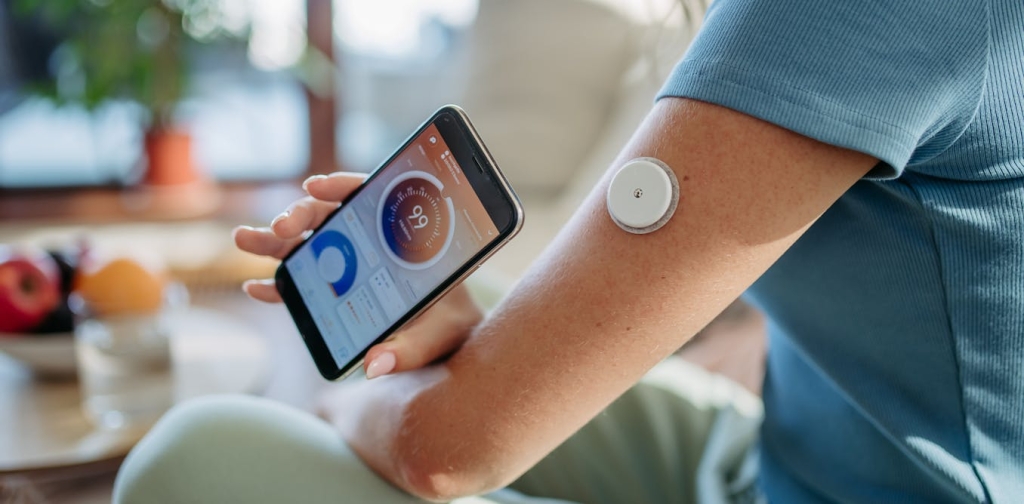

Continuous glucose monitors have transformed life for many people with type 1 diabetes. Instead of relying on finger-prick blood tests throughout the day, users can track their blood sugar levels almost continuously. This allows them to receive alerts via a smartphone when levels become too high or too low and spot patterns that help them better manage their condition.
But the latest research from my colleagues and I has uncovered a little-known blind spot. During the most extreme high and low blood sugar episodes, these devices cannot tell users exactly how severe those events are. While this limitation doesn’t affect the standard measures doctors use to assess diabetes management, it does mean that some important information is lost when blood sugar moves beyond the monitor’s measurement range.



Continuous glucose monitors are small sensors, usually worn on the upper arm, that measure glucose levels every few minutes and send the results to a smartphone app. They have revolutionised diabetes care over the past decade by giving people a much clearer picture of how their blood sugar responds to meals, exercise, sleep and insulin.
Like every scientific instrument, however, they have limits. They can only measure blood sugar within a fixed range. If blood sugar rises or falls beyond that range, the sensor can tell you that levels are extremely high or extremely low, but it can no longer say exactly how high or how low they are.
A useful comparison is a kitchen thermometer that only measures up to 100°C. Once the temperature exceeds that point, the thermometer can tell you it is at least 100°C, but not whether it is 120°C or 180°C. Continuous glucose monitors work in much the same way when glucose moves beyond their measurement range.
What we found
To find out how often this actually happens, we analysed nearly 47 million publicly available continuous glucose monitor readings from 948 people with type 1 diabetes across four large international clinical trials.
Between 93.5% and 100% of participants across the four studies experienced at least one reading that reached the upper or lower measurement limit. In other words, this is something that affects almost everyone with type 1 diabetes who uses these devices over a period of time.
The pattern was particularly striking for high glucose levels. In three of the four studies, more than one-third of these episodes remained at the upper measurement limit for at least an hour. The longest episode for a typical participant lasted between two and three hours. Throughout these periods, the monitor could confirm that blood sugar was extremely high, but it couldn’t distinguish between levels just above its limit and those that were substantially higher.
The pattern wasn’t evenly distributed either. Younger people experienced upper-limit readings more frequently than older adults. This reflects what we already know about the challenges of managing blood sugar during adolescence.
We also found that people with higher HbA1c levels (a blood test that reflects average blood sugar over the previous two to three months) were much more likely to reach the monitor’s measurement limits. In simple terms, those who already struggle most to manage their diabetes are also the people most likely to encounter this hidden limitation.
Read more: How mouth health affects diabetes – and vice versa
Reassuringly, this limitation doesn’t appear to undermine the figures that doctors rely on in everyday diabetes care. We compared continuous glucose monitor readings with simultaneous finger-prick blood glucose measurements.
We found that even when sensors regularly reached their measurement limits, the standard summary measures used in clinical practice remained remarkably robust. Metrics such as average glucose levels, glucose variability and time in range (the proportion of the day spent within the target glucose range) were largely unaffected.
That is probably because, even among participants with relatively frequent glucose readings that meet or exceed measurement limits, most readings still fell comfortably within the sensor’s measurable range. So, the main consequence is not inaccurate summary statistics, but a loss of detail during the most extreme glucose events. We know glucose is very high or very low, but we cannot tell exactly how high or how low.
What should change?
Current smartphone apps and web-based software summarise glucose data in many different ways. But they never explicitly state that a sensor has reached its measurement limits, how often this happened or how long it lasted.
Adding that information would need only a relatively small change to existing software. But that could help doctors and researchers identify the people for whom this blind spot is most relevant and interpret glucose data with greater confidence.
Continuous glucose monitors remain one of the most important advances in diabetes care. Our findings shouldn’t discourage anyone from using them. Every scientific instrument has a measurement range. Understanding those limits helps us make better use of the information it provides. Recognising when a glucose sensor has reached the edge of what it can reliably measure is another step towards making an already transformative technology even more useful.





















Comments are closed.