


In response to a derogatory remark made in May 2026 by India’s chief justice, who called unemployed youth in India “parasites” and “cockroaches,” the Cockroach Janata Party (CJP) was born. Rather than reject the label, Gen Z claimed it defiantly and turned it into a symbolic reassertion of identity.
Described as unprecedented due to its reach, impact and speed, as well as its creativity and courage, this Gen Z movement shares a playbook with other recent youth-led uprisings in South Asia and internationally.


Why this story matters
The movement began with a demand for the government to take responsibility for the leaked national medical entrance exam, NEET, which quickly spiralled into a nationwide push for educational reform and broader institutional accountability. Huge momentum grew online as protesters flooded Instagram with satirical reels, mocking memes and irreverent language.
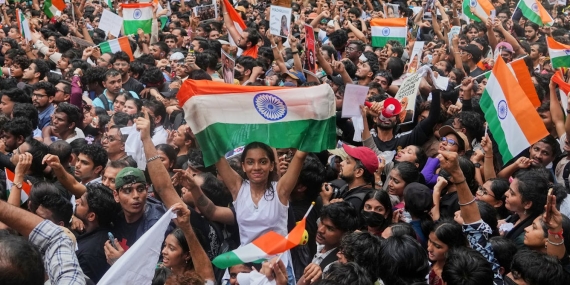
That energy spilled into the streets on July 20, when a peaceful protest at Jantar Mantar, New Delhi, was violently disrupted by police wielding lathis and using tear gas and pellet guns, injuring hundreds.
In the days that followed, hundreds of thousands of citizens of all ages showed up in solidarity, joining the movement from other Indian cities. Parallel protests were sparked internationally in support of the students in Delhi. The numbers of protesters and the speed at which they grew forced the Indian state to the negotiating table, culminating in the resignation of the education minister. Government crackdowns on protesting youth, however, have continued both offline and online.
As an interdisciplinary social science researcher whose work focuses on migration, social justice and storytelling, I study the way narratives affect how we view the world. Stories also become the lens through which we come to understand ourselves in relation to the world we live in.
This “student protest story” — in the way it’s unfurled so far — has inspired hope for democratic governance for many at a moment when collective acts of resistance feel urgently needed the world over.
Read more: How Gen Z and India’s Cockroach Janata Party are successfully challenging Narendra Modi
Solidarity across divides
What stands out most to me is how this movement brings people together across deep political and social divides.
Indian society has long established, assumed and reinforced these divides on grounds of identity, ideology and political belief. Feeling empowered to express themselves freely and fearlessly, they spoke of change and accountability.
The fact that such a diverse group found community and safety in this protest space feels like a genuine fresh start.
Women spoke openly about how safe they felt at the protest site, including in the middle of the night — something uncommon on Delhi streets after nightfall.
That care extended beyond safety alone. Food was in abundance; medical and legal aid were freely available. The doors of places of worship were open through the night, welcoming anyone who needed shelter. A shared cause united people as they spoke in one language and one voice.
One message that rang out loud and clear was that they don’t care in the least about who practises which religion — they care about the much more pressing everyday issues the state has failed to address, like education, employment, rising prices and affordability.
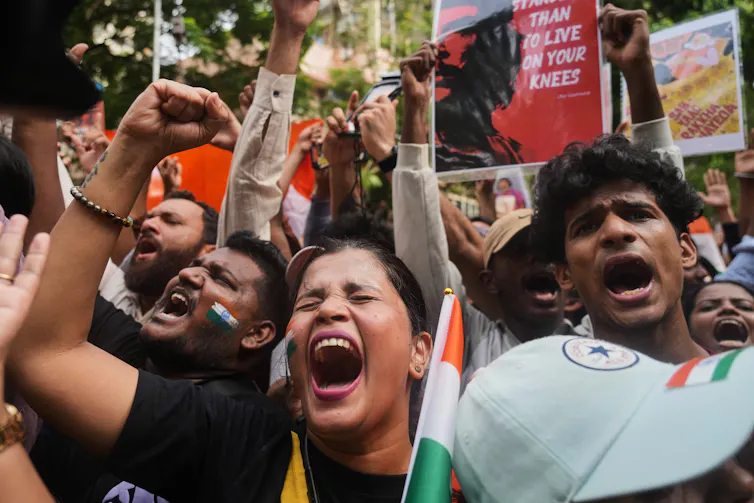
These challenges directly impact their present and, if left unaddressed, will cost them their future. Protesters denounced the politics of hate, exclusion and violence, calling instead for solutions to youth unemployment and underemployment, an issue that was already urgent back in 2019.
These issues feel like a ticking time bomb, especially when positioned against the argument that India’s youth represent the country’s demographic advantage in a nation where nearly two-thirds of its 1.4 billion population are under the age of 35.
A hopeful road ahead
It’s still early days in this developing story. The movement is tangled and potent, full of thematic and real-world possibility, and its path forward is not easy to predict.
What I know is this: sharing the diasporic sensibility and split belonging that so many of us who live outside of our countries of birth carry, I am invested in its evolution, in the direction it takes and in its success.
Read more: Diaspora communities carry the burden of watching war from afar
I hope that it can keep building on the promise and power it’s already garnered, with true inclusion at its centre.
And more optimistically speaking, I hope its potential is leveraged through strategy and solidarity to ensure the system works more efficiently and optimally to secure the future for the generations coming after us.
















Comments are closed.