


Dear subscriber,
Hi everyone, hope this finds you well. This week Indonesia’s financial ecosystem is sending signals worth paying close attention to: a major banking asset transfer, fresh VC capital from Japan, a landmark AI infrastructure bet in Batam, and a regulatory crackdown that draws a clear line on where Web3 ends and Indonesian law begins. On top of that, OJK’s latest monthly report confirms what many have suspected — Indonesia’s financial fundamentals are holding up remarkably well in one of the most uncertain global environments in recent memory. Let’s get into it.



Most founders know the feeling: the idea is clear in your head, but it stalls the moment you ask how to actually build it. For years, the answer was either learning to code or finding a technical co-founder who truly gets your vision. Vibe coding offers a third path. Platforms like Hostinger Horizons let founders simply describe the product they want, and turn that description into a working app or landing page—not a half-finished prototype, but an MVP ready to hand to your first users. The distance between idea and execution shrinks dramatically, which means non-technical founders can validate assumptions and read product-market fit signals long before an engineering team is even in place. If execution is now one prompt away, the question is no longer can you build it, but which idea do you ship first? Try it here.
Stay ahead,
DailySocial Team
-
Banking consolidation accelerates as SMBC Indonesia offloads its pension book. SMBC Indonesia is selling a ~$1.1 billion pension-related loan portfolio to state lender BTN in two tranches: one covering TASPEN-administered civil servant loans (Rp12.58 trillion), the other covering ASABRI-linked military and police pension assets (Rp7.34 trillion). The deal, valued at 46.3% of SMBC Indonesia’s equity, doesn’t require shareholder approval under IDX rules. It signals a broader strategic pivot where foreign-owned banks are thinning out legacy asset portfolios to redeploy capital into higher-growth segments. State banks like BTN are stepping in to absorb the pension economy’s backbone.
-
A fresh $113M war chest from Japan is betting on Asia’s next wave of seed-stage builders. Genesia Ventures has closed its fourth fund at $113 million, nearly double Fund III, targeting seed-stage startups across Japan, Southeast Asia, and India. The Tokyo-headquartered firm, which runs an office in Jakarta alongside Ho Chi Minh City and Bengaluru, plans to go deeper per company rather than wider on deal count. Its SEA portfolio includes Docquity and Qoala, and it is explicitly focused on founders building at the intersection of AI, energy transition, and structural market shifts. For Indonesian founders navigating a tight funding environment, a Japan-anchored LP base entering earlier is a meaningful signal.
-
Indonesia just drew the clearest line yet on where Web3 meets political speech. Polymarket was blocked by Indonesia’s Ministry of Communication (Komdigi) on May 22 after the platform launched a market on whether President Prabowo would leave office before his October 2029 term, generating over $51,000 in trading volume within days. The ministry classified prediction markets broadly as illegal online gambling, regardless of their crypto-native architecture, and announced it would trace and block affiliated social media accounts. The move places Indonesia alongside India, Singapore, and Brazil in restricting the category, sending a clear signal to any Web3 platform: decentralization doesn’t equal exemption from local law.
-
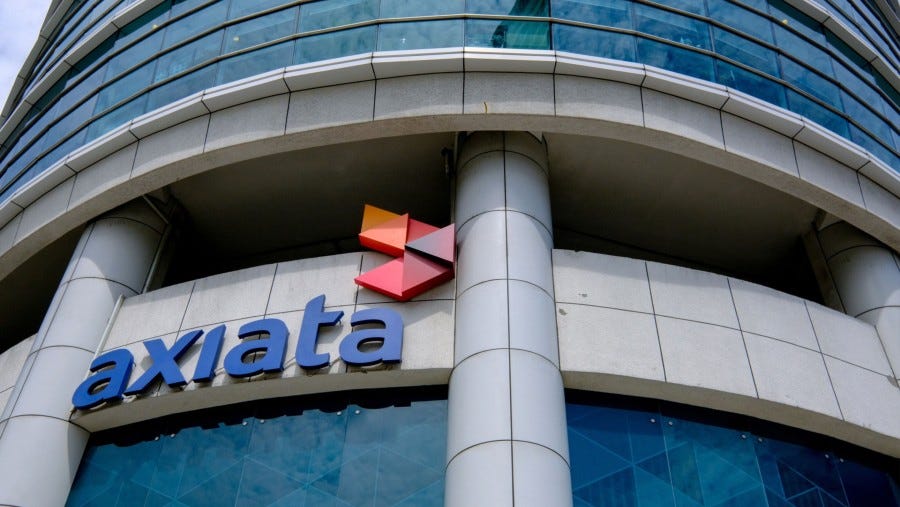
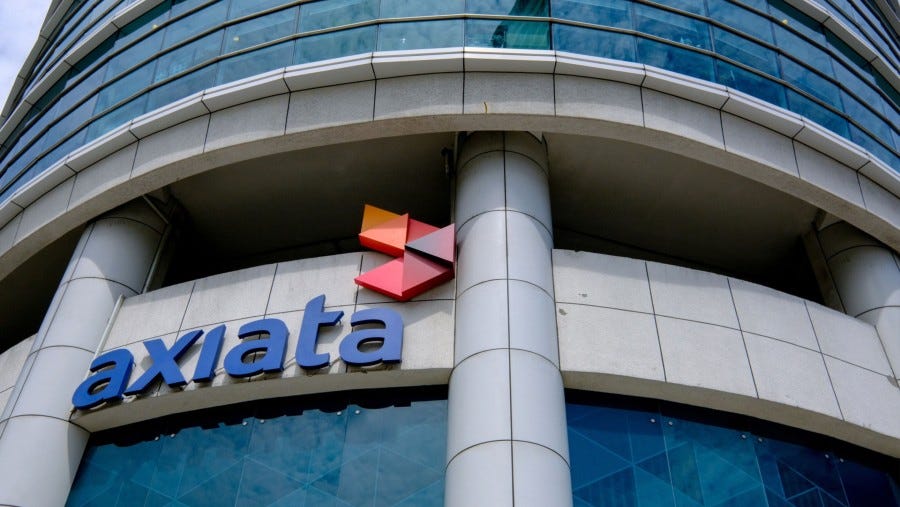
The XLSMART merger is paying off faster than the market expected. Axiata posted Q1 2026 net profit of RM273.8 million, up 71% year-on-year, despite a 3.2% revenue dip driven entirely by unfavorable FX translation. Underlying profit more than doubled to RM438 million, while EBITDA climbed 25.9% at constant currency. The XLSMART integration, born from the April 2025 merger of XL Axiata and Smartfren, is progressing ahead of plan with the combined entity now serving 94.5 million subscribers and holding 25% of Indonesia’s mobile market. The group’s technology subsidiaries ADA and Boost both turned profitable for the first time in Q1 2026, with 5G rollout advancing across all operating markets.
-
Samsung is doubling down on Southeast Asia even as the market contracts. Samsung Electronics held a 21% market share in Southeast Asia in Q1 2026, shipping 4.6 million units despite the regional market shrinking 9% year-on-year to 21.6 million units. Average selling prices surged 19% to $349 driven by inflation, yet Samsung held its lead through continuous brand investment and distribution channel expansion. The dual-track Galaxy S26 and Galaxy A series strategy proved its worth across price segments, with Omdia noting that battery, camera, display performance, and after-sales service are now the real competitive differentiators. For a mobile-first market like Indonesia where the Galaxy A series consistently punches above its weight, Samsung’s commitment to the affordable-yet-aspirational segment keeps it well-positioned as consumer purchasing power remains under pressure.
-
China’s data center giants are planting their largest international flag in Batam. PT Equator Gate System Batam (EGSB), backed by China’s Range IDC, has committed $5 billion (Rp88 trillion) to build a high-density AI data center on 30 hectares in Nongsa, Batam, Range’s first international expansion outside China. BP Batam signed a power supply agreement with PLN Batam to ensure uninterrupted energy and is running a fast-track execution scheme to accelerate groundbreaking. The project is projected to absorb 700 to 800 skilled workers through partnerships with local universities. Batam is no longer pitching itself as just a manufacturing SEZ; it’s positioning as an AI and cloud execution hub for global digital industry, with this anchor investment expected to pull in downstream cloud, semiconductor, and AI services players.
Indonesia’s financial sector is holding firm despite one of the most turbulent global backdrops in years. OJK’s April 2026 Monthly Board Meeting report, released on May 5, confirmed that the domestic financial system stayed stable even as the IMF cut its 2026 global growth forecast to 3.1% and the closure of the Strait of Hormuz kept energy prices volatile. Indonesia’s domestic economy grew a solid 5.61% supported by household consumption and government spending, with foreign reserves at $148.2 billion and a trade surplus of $1.2 billion in March 2026. The Consumer Confidence Index remained in optimistic territory, and banking credit continued expanding at 9.49% year-on-year to Rp8,659 trillion, with investment credit leading the pack at 20.85% growth.
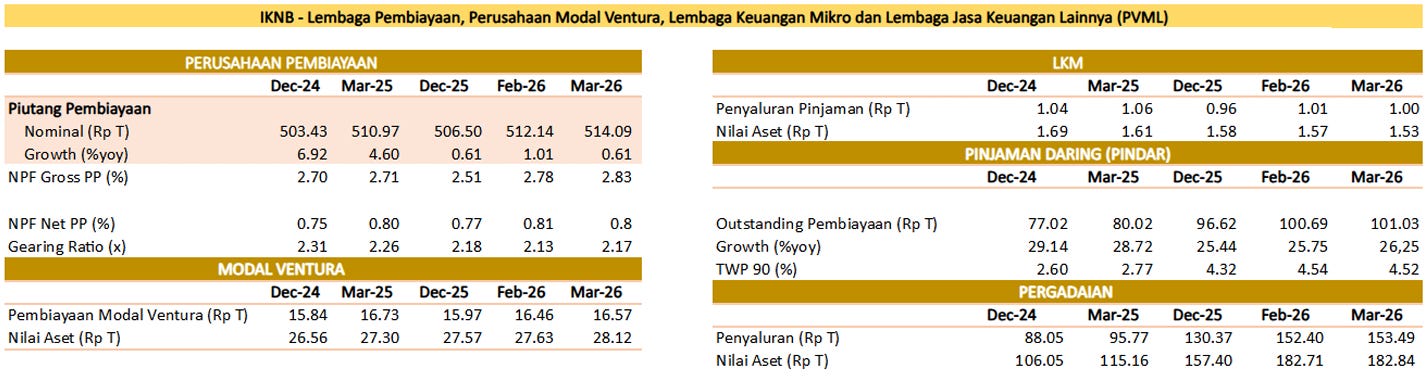
The numbers on banking health are genuinely encouraging. NPL gross held steady at 2.14%, capital adequacy ratio (CAR) remained strong at 25.09%, and third-party deposits grew 13.55% year-on-year to Rp10,231 trillion. BNPL credit via banks hit Rp28.3 trillion across 30.81 million accounts, up 24.2% year-on-year, while digital lending (Pindar) crossed the Rp100 trillion outstanding milestone for the first time, growing 26.25% year-on-year with TWP90 default ratio holding at 4.52%. The capital market added 1.74 million new investors in April alone, bringing the year-to-date total to 26.49 million investors, a 30% increase from the start of 2026.
The fintech and digital asset layer is maturing fast under OJK’s active oversight. The regulatory sandbox for Financial Technology Innovation (ITSK) has received 323 consultation requests since its launch, with 4 sandbox participants already graduating across tokenized gold, securities, and property ownership models. There are now 25 licensed ITSK operators registered with OJK covering alternative credit scoring and financial aggregation services, with 1,300 active partnerships established with financial institutions across banking, insurance, lending, and securities. For founders and investors in Indonesia’s fintech and digital asset space, the message from OJK is clear: the regulatory framework is actively shaping and enabling the next layer of financial infrastructure, not just policing it.


















Comments are closed.