


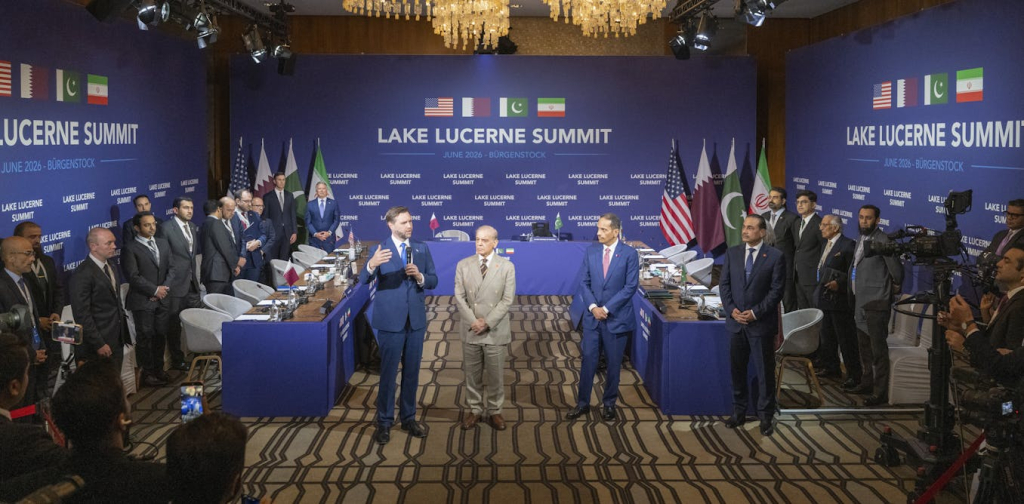

When it was signed at the end of the G7 summit on June 17, the US-Iran memorandum of understanding (MoU) was hailed as a diplomatic breakthrough. By reopening the Strait of Hormuz, easing sanctions and launching a 60-day negotiating process, it felt like a positive step on the road to ending a conflict that has threatened regional stability and the global economy.
Yet the past weekend’s events have exposed the agreement’s fragility. While US and Iranian negotiators reported progress in the first round of talks in Switzerland, the US president Donald Trump’s renewed threats of military action against Iran and the physical security of Iranian negotiators prompted fears that the diplomatic process may break down and the conflict resume in earnest.



The status of the Strait of Hormuz, arguably the only positive takeaway for the US from the MoU, also remains uncertain.
So as it stands, the agreement is better understood as enabling a pause in hostilities than an actual settlement. It largely restores pre-war conditions while leaving tensions between the US, Iran and Israel unresolved.
Israel remains the elephant in the room. It is deeply affected by the deal but is not a party to it. And it’s still capable of undermining any diplomatic progress with its continuing assault on Lebanon in contravention of the MoU.
The most likely outcome is a return to grey-zone conflict, meaning hostile measures that stop short of outright shooting warfare. In this case, proxy warfare, cyber operations, economic coercion and periodic military escalation. The shooting may have stopped – but the forces that ignited the conflict remain.
None of which looks good for Washington. Trump entered the confrontation promising to dismantle Iran’s nuclear programme, curb its regional influence and restore American deterrence. Instead, the MoU grants Tehran economic relief while leaving unresolved key issues – missile capabilities, proxy networks and long-term limits on uranium enrichment.
For Iran, survival itself is a strategic victory. Despite sustained US and Israeli pressure, the regime remains intact and negotiating rather than capitulating.
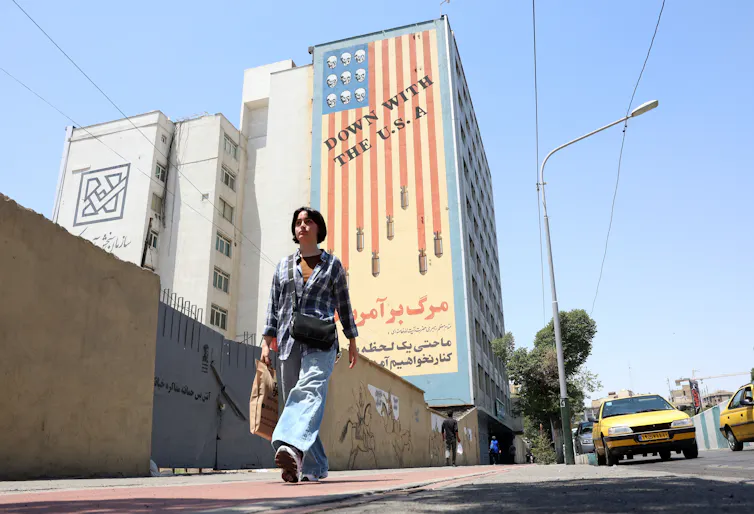
The conflict also exposed the limits of regional security arrangements. Gulf states felt and witnessed how even America and Israel’s overwhelming military superiority and expensive advanced weapons systems do not necessarily translate into decisive political outcomes. Nor do they guarantee protection from escalation.
For the US, the agreement appears to reflect the mounting costs of escalation: US$132 billion (£100 billion) and counting. Disruption in the Strait of Hormuz raised energy prices, strained alliances and exposed the limits of military coercion. While sanctions relief and restored oil flows may ease immediate pressures, they also risk reinforcing the perception that sustained pressure and proxy warfare can force even a superpower to negotiate.
Perceptions matter in international politics. For America’s gulf partners, the MoU may raise doubts about Washington’s willingness to sustain ambitious objectives when the economic and political costs become too high.
Iran, meanwhile, appears to have been strategically strengthened by the conflict. The MoU creates space for economic recovery and strategic adaptation, making it likely that Iran will continue pursuing influence through cyber operations, proxy networks and other forms of grey-zone competition.
Israel faces perhaps the most difficult strategic recalibration. For decades its security policy has rested on military superiority backed by close US support to the tune of some US$4 billion a year. The MoU shows how its strategic priorities are now at loggerheads with those of its main ally and sponsor. It raises questions about how far Washington is willing to align its regional priorities with those of Jerusalem.
Read more: Donald Trump and Benjamin Netanyahu have different war aims – can the Iran peace deal survive?
Israel’s strategic culture has always prioritised self-reliance. This suggests it will continue to pursue covert operations, targeted assassinations and strikes against perceived Iranian threats.
While there has been no actual fracturing of the US-Israeli security relationship, the clear strategic differences could make future coordination more transactional – even as Israel remains heavily dependent on US military and diplomatic support.
Criticising members of the Israeli cabinet who had denounced the MoU, the US vice-president, J.D. Vance, told a White House briefing on June 19 that “Donald J Trump is the only head of state in the entire world who is sympathetic to the nation of Israel at this moment in time”.
Grey zone warfare: the modern default for conflict
But the broader significance of the agreement struck at Versailles on June 17 lies in what it reveals about conflict in the contemporary geopolitical situation. Rather than producing clear victories or defeats, modern confrontations increasingly become prolonged competitions in the grey zone between peace and war. As escalation becomes too costly, states regroup and compete through alternative means.
As far as the Middle East is concerned, this means that significant risks remain. A comprehensive agreement within 60 days appears unlikely given persistent disputes over sanctions, enrichment and regional security. Continued Israeli operations in Lebanon could quickly unravel the fragile pause. America’s allies in the gulf could respond to all this uncertainty by deepening ties with China and Russia.
The MoU is less a peace agreement than a diplomatic holding pattern. It lowers tensions and stabilises markets but leaves the underlying drivers of conflict intact. US-Iran-Israeli relations are therefore likely to continue oscillating between confrontation and accommodation.
Addressing deeper sources of instability – regime security concerns, ideological rivalry and regional proxy networks – would require a far more ambitious settlement than any 14-point memorandum can provide.
















Comments are closed.