


The World Health Organization (WHO) has declared the Ebola outbreak in the Democratic Republic of the Congo a “public health emergency of international concern”, with cases now confirmed in neighbouring Uganda. Here is what you need to know.
What is Ebola?
Ebola is a serious potentially fatal infectious disease. It causes fever, damage to blood vessels, and in severe cases, bleeding, organ failure and death. It was first identified in 1976 in central Africa and most outbreaks have occurred there since.


What is Bundibugyo virus, and how is it different from “regular” Ebola
Ebola is actually a group of related viruses. The most well-known and deadly is the Zaire strain, which has caused the largest outbreaks. Bundibugyo is a different strain, first identified in Uganda in 2007.
The Bundibugyo virus tends to kill around 30-50% of those infected – serious, but slightly lower than some Zaire outbreaks.
To put that in context, seasonal flu kills fewer than one in 1,000 people. COVID killed around one to two in 100 people early in the pandemic. Ebola is therefore far more deadly than most diseases most people have encountered. Outcomes depend on factors like how quickly someone receives care, the strength of the local health system and whether the patient has other underlying conditions.
Existing Ebola vaccines were designed for the Zaire strain and may not protect against Bundibugyo.
How does Ebola spread from person to person?
Ebola spreads through direct contact with an infected person’s body fluids, such as blood, vomit, diarrhoea, sweat or semen. This most commonly happens when caring for sick patients, during traditional burial practices involving the body, or through contact with infected animals. Ebola does not spread through the air like flu or COVID, and people are not contagious before their symptoms begin.
Why has this outbreak appeared in Uganda, and could it spread internationally?
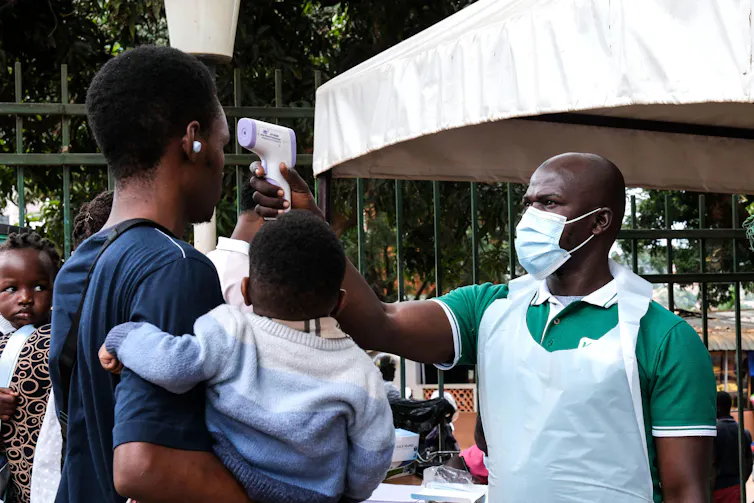
Uganda borders the Democratic Republic of the Congo, where Ebola outbreaks occur regularly. People, animals and goods move frequently across that border, which can allow disease to spread before it is detected. International spread via air travel is possible but unlikely to cause a major global outbreak – Ebola requires close physical contact to spread, and international monitoring and airport screening systems help catch cases early.
What is a “public health emergency of international concern”?
This is the World Health Organization’s highest level of global health alert. It signals that an outbreak poses a potential international risk and that countries need to work together urgently. It helps unlock funding, technical support and faster international cooperation. It does not mean a global pandemic is inevitable. It is a tool to mobilise a rapid, coordinated response.
What are the symptoms of Bundibugyo virus disease?
Early symptoms are similar to flu or malaria: fever, tiredness, headache, muscle pain and sore throat. As the illness progresses, patients may develop vomiting, diarrhoea, abdominal pain, a rash, confusion and shock. Some patients experience bleeding, though this is not universal. Because the early symptoms overlap with many common diseases, laboratory testing is needed to confirm the diagnosis.
Why do Ebola outbreaks keep occurring in the DRC?
Scientists believe Ebola lives naturally in certain fruit bats. Outbreaks usually begin when people come into contact with infected animals – for example, through hunting or handling wildlife. The DRC experiences repeated outbreaks because of dense forests, high human-wildlife contact, weak health infrastructure, conflict, poverty and limited access to medical care. Climate change and deforestation may increase the risk further.
If there is no vaccine, what treatments are available?
There is no approved vaccine or targeted treatment for Bundibugyo virus specifically. Patients are treated with supportive care, meaning medical treatment that keeps the body functioning while it fights the infection. This includes fluids, oxygen, nutritional support and treating complications. Good supportive care can significantly improve a patient’s chances of survival. Researchers are actively studying antiviral drugs and antibody treatments that might work against multiple Ebola strains.
What is being done to stop the outbreak?
Health authorities, supported by the WHO and international partners, are working to identify cases quickly, isolate patients, trace people who may have been exposed, and educate communities. Safe burial practices are also critical. The global capacity to respond to Ebola has improved greatly over the past decade, with better laboratory testing, faster information-sharing, and stronger regional coordination.
Is there an Ebola vaccine? If not, are there developments in this field?
Yes, two vaccines exist for the Zaire strain of Ebola and have proven highly effective. However, neither is approved for Bundibugyo virus. Scientists are now working urgently to develop vaccines that protect against multiple Ebola strains at once. New antibody treatments that could work across different strains are also in development, with promising results in early research. The current outbreak has reinforced how important it is to invest in these broader tools before the next crisis strikes.













Comments are closed.